The hundred-krone note flew across the freshly washed gold mosaic floor and landed right in front of her knees. “I’ll give you a hundred krone if you serve me in Japanese,” said Flemming Albertsen without looking up from his menu. “My partners want to see if anyone in this country can do anything besides wash gold. ” The three men with him burst into laughter.
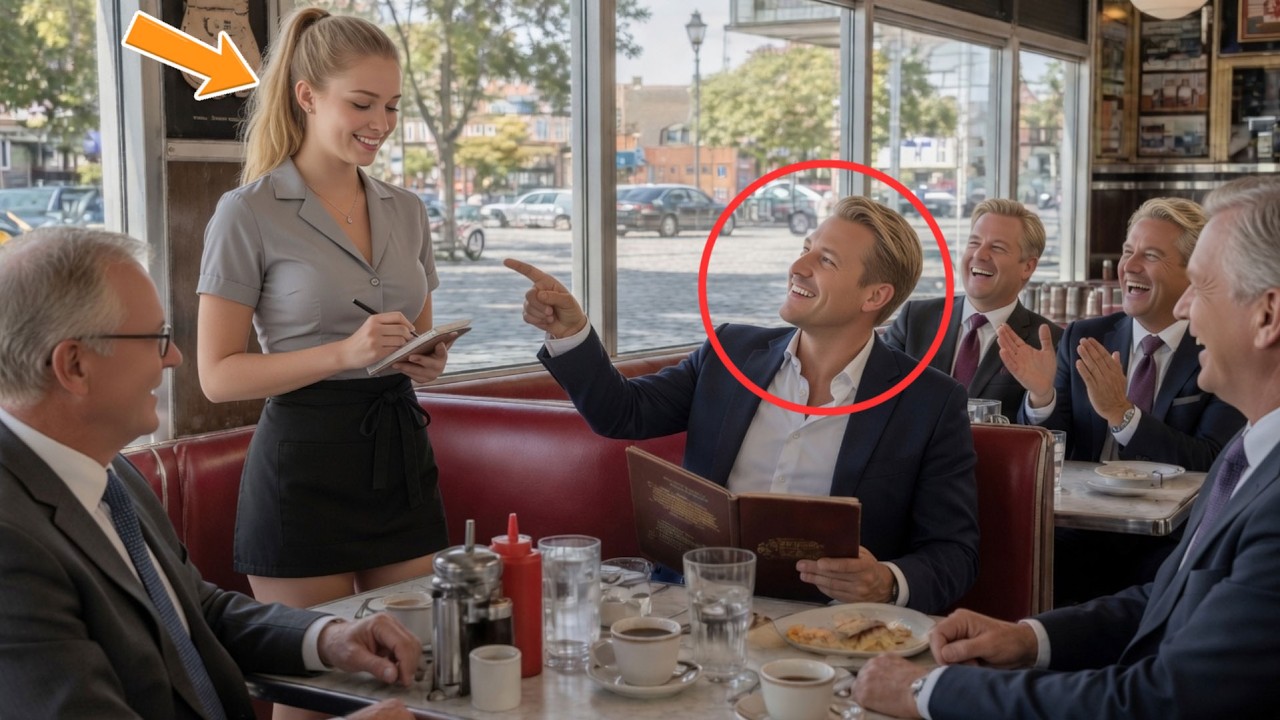
The two Japanese businessmen at the opposite end of the table did not laugh. One of them, the one with coarse gray hair and a dark gray suit, lowered his gaze to his water glass. Connie didn’t stand up. She finished wiping the last piece of gold mosaic, slowly wrapped the mop around the handle, and picked up the note from the floor.
She folded it four times. She put it in her apron pocket without saying a single word. “Hey, did I ask you something? ” Flemming said, now looking directly at her.
“No,” she replied quietly. “You didn’t ask me anything. ” And she continued toward the kitchen. So simple, so quiet, so invisible.
The restaurant at Hotel Dangletager in the city center was one of those places where silence costs money. Linen napkins had weight, windows faced the King’s New Square, as if the world outside was just decoration. The kind of place where waiters smile with the right part of their face, and customers speak softly. Not because they have anything private to say, but because they’ve learned that speaking quietly is another way of showing you belong.
Flemming Albertsen came two or three times a month, always with important people, always with the same expression of someone who knows the table is already ready before he asks for it. That Tuesday, he had a meeting worth, according to his own words, 380 million dollars. The company Tanaka Import AS had this year been the bridge between Japan and Europe in the distribution of sake, handmade ceramics, and luxury spirits. Flemming wanted an alliance.
Connie stopped listening to the details. She had heard this kind of talk before. Rich men, big numbers, the same game. She finished her work and went to the staff area.
On her way, she passed by a quiet man with a restrained smile, someone who believed honest work had its own kind of dignity, who believed good things came slowly, but they came. “It doesn’t matter what they say, Brand,” she heard Flemming say as she walked past the table. “We’re talking about an operation with a twenty-year projection supported by my consortium and by—”
Connie didn’t hear the rest. She didn’t need to.
Twenty minutes later, when she came down to the lobby, Ib was standing at his usual spot by the main entrance with the posture of someone who had seen too many things happen at this hotel to be surprised by anything. He was the head of security, a man who kept his eyes open and his mouth shut. “Something happened upstairs,” he said quietly. Connie looked at him.
“Albertsen,” Ib said. “He went up to the third floor, was there for twenty minutes, and came down with his teeth clenched. ”
“What does that mean? ”
Ib shook his head.
“I don’t know. But he left without saying goodbye to his partners. And he looked like a man who had just lost something he thought he owned. ”
Connie thought about the hundred-krone note in her apron pocket.
She thought about the way Flemming Albertsen had laughed. She thought about the way the Japanese businessman had lowered his eyes. That evening, at eight o’clock, she was in the archive room. Not the one where they kept the restaurant’s old menus and receipts.
The other one. The one Ib had shown her years ago, when she first started working at the hotel, the one she had never opened because it belonged to a part of the building that was supposed to be forgotten. She had the key in her hand. The note was still in her pocket.
The laughter was still in her ears. She unlocked the door. The room was dusty, cold, and filled with boxes that hadn’t been touched in decades. She started going through them, carefully, methodically.
She didn’t know what she was looking for. But she knew that Flemming Albertsen didn’t just laugh at anyone. He had a reputation. He had power.
He had people who feared him. And yet, that afternoon, he had left the hotel looking like a man who had just seen a ghost. She found the box at the bottom of a stack. It was labeled with a name she didn’t recognize.
Inside, there were papers, old contracts, and a tape recorder. She pressed play. A voice. Flemming Albertsen.
And another voice. A lawyer. They were talking about something called “the transfer of the estate. ”
Connie listened.
Her hands started to shake. The tape was dated 1992. Thirty years ago. And the voice on the recording said something that made her sit down on the dusty floor.
“The girl is not the heir. We make sure she never knows. We make sure she never gets a single krone. ”
Connie listened to the whole tape.
Then she played it again. And again. She thought about her mother, who had died when Connie was four years old. She thought about the grandmother who had raised her, who had always said that Connie’s father had died in an accident, that there was nothing left, that they had to work hard and never expect anything from anyone.
She thought about the name on the box. Her mother’s maiden name. She thought about the hundred-krone note in her apron pocket. She put the tape back in the box.
She locked the archive room. She went back to her small apartment that night, and she didn’t sleep. For the next three days, she did her job as usual. She washed floors.
She cleaned gold. She listened to men laugh. On the fourth day, she went to see a lawyer. Not one of the ones who worked for Flemming Albertsen.
A small, quiet man in an office above a bakery. She put the tape recorder on his desk and pressed play. When the tape ended, the lawyer looked at her for a long time. “Where did you get this?
”
“The archive at the hotel where I work. ”
“Do you know what this is? ”
“I think it’s proof that Flemming Albertsen cheated my family out of an inheritance. Thirty years ago.
My mother’s inheritance. ”
The lawyer leaned back in his chair. “Do you know who Flemming Albertsen is? ”
“I know he’s a rich man who thinks he can throw a hundred-krone note at a cleaning lady.
”
“Connie, this man has lawyers who can crush you. He has connections. He has money. He could make your life impossible.
”
Connie looked at him. “He already did. He just didn’t know it. ”
She took the tape back.
She went home. She opened a drawer in her kitchen and pulled out a folder she hadn’t looked at in years. Old papers, a birth certificate, a deed. She was still holding them when her phone rang.
“Connie? ” It was Ib. “Albertsen is here. He’s asking for you.
”
“For me? ”
“He’s in the private dining room. He wants to talk to you. ”
Connie looked at the papers in her hands.
She looked at the hundred-krone note she had kept, folded four times, in her wallet. She had waited thirty years for this moment. She had washed floors. She had cleaned gold.
She had listened to men laugh at her. Now one of them was waiting for her. She put the papers in her bag. She put the tape in her pocket.
She had the note in her wallet. And she walked out the door to face the man who thought a hundred kroner could buy her silence. —