The blade came fast. Lars managed to parry, but it opened a gash on his arm. Two staff members and one of the lawyer’s men tackled Rasmus before he could strike again. The old man fought, spat, and kicked like a trapped animal.
*Let me go. Let me go. * Lars pressed his hand against the wound and ordered him handed over to the authorities. Rasmus kept shouting as they dragged him out.
Margrete stood nearby. She said something, but no one listened. She looked at Lars—not with love, not with regret, but with hatred, as if this were his fault for refusing to obey her any longer. That same evening, Rasmus was taken to the local prison.
The charges were severe: attempted murder, participation in Anders’s poisoning, pursuit of Inas, and involvement in falsified documents. Espen came under investigation and was stripped of all administrative duties. Some versions would later claim he fled before the trial; others, that he tried to claim something he could never prove. For the Alstrup estate, his name became part of the same lie.
Margrete was banished from the estate. There was no grand scene, no final forgiveness, no reconciliation. Lars ordered her taken to a remote house far from the administration, far from Anna, and far from any power over the family. Before she stepped into the carriage, she looked at him.
*”One day you’ll understand what I did to survive. “* Lars answered: *”I don’t understand what you did to control. “* Margrete may have waited for a last flicker of doubt. A crack in him.
She found none. The carriage drove away. Louise left the following day. Before she went, she met Inas in South Harbor.
They were not friends. Perhaps they never would be, but they were no longer enemies. *”I hope you get your name back,”* said Louise. Inas bowed her head.
*”And I hope you don’t let anyone decide who you are. “* Louise smiled faintly. *”I’ll try. “* Then she left without looking back.
Not like a defeated woman, but like someone who had chosen to step out of a story she didn’t want to inherit. After the storm, happiness didn’t come instantly. Inas didn’t return to the old room. She didn’t put on Lars’s ring.
She didn’t allow everyone to pretend that discovering the truth was enough to heal six years of fear. *”I can’t go back as if nothing happened,”* she told Lars one afternoon. They were in South Harbor, far from the salon where everything had collapsed. *”I know.
The truth being told doesn’t mean my heart is ready. “* Inas looked at her hands. *”To survive, I had to believe you were dead inside me. Now I don’t know how to learn to look at a dead man who breathes.
“* Lars accepted the words with pain, but without defending himself. *”Then look at me as a husband still. Let me be someone who won’t leave you. And if that’s never enough, at least you’ll have had peace.
That would already be more than they gave you here. “* Inas looked at him for the first time without anger. It wasn’t forgiveness, but it wasn’t a closed door either. Lars arranged a small house in South Harbor for Inas, David, and Rikke.
It had light, a nearby kitchen garden, and enough distance from the main building. Inas agreed to live there for David’s and Rikke’s sake, not for comfort. David took a long time to understand everything. It wasn’t told to him all at once.
Inas and Lars chose simple words, without burdening the child with adult guilt. Lars began walking with him through the fields, teaching him how to prune a branch, how to choose a healthy crop, how to listen to the earth after rain. One day David called him *far* without being prompted. It happened beside a row of new plants.
The boy pricked himself on a thorn and lifted his hand. *”Far, look. “* Lars stood still. David didn’t seem to notice the tremor in his face.
*”Far. “* Lars gently took his hand. *”It’s not deep. Then nothing will happen.
“* *”No, but it needs cleaning. “* Inas watched them from a few steps away. When she saw Lars’s eyes fill with tears, she said nothing. She just let that moment exist.
Old Anders lived his last months with more peace than he had known in years. He didn’t regain his strength, but he regained clarity. He was allowed to meet David. He was allowed to ask Inas for forgiveness, even though she didn’t know how to answer at first.
Over time, she agreed to sit beside him in the afternoons. Not to erase his silence, but to let him at least finish speaking. *”I should have protected you,”* Anders said once. Inas looked at the garden.
*”Yes. “* He closed his eyes. *”Thank you for not lying to me. “*
Nearly a year passed.
Alstrup was no longer as grand as before. Some lands were sold to pay debts, repair damage, and settle legal matters. The name lost its shine in certain circles, but the house gained something it had never had under Margrete: air. The corridors no longer felt like a prison.
The old orangery was opened. Lars didn’t fill it with rare flowers. He made it a place for useful plants, medicinal herbs, and new seeds. Inas helped some mornings.
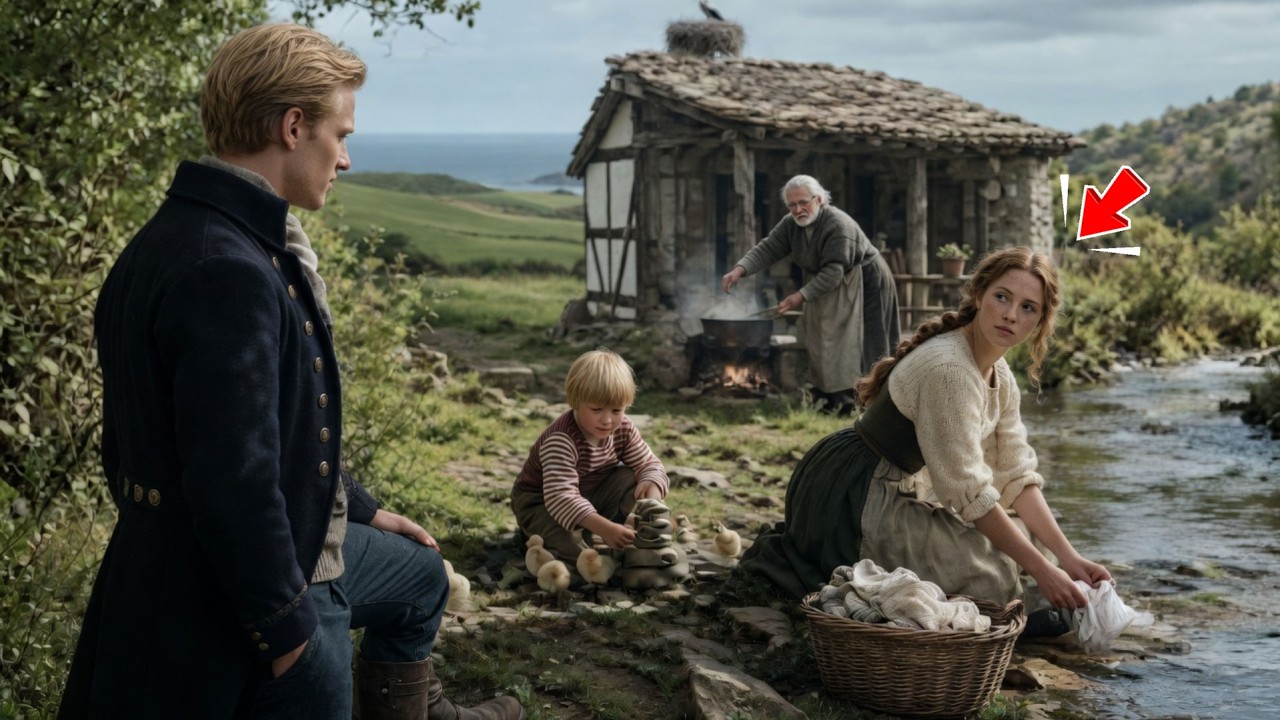
At first in silence, then with precise instructions. But Lars’s most important act didn’t happen inside the estate. It happened at the stream. He had a small wooden bridge built over the spot where Inas had fallen that night.
It wasn’t large or luxurious. It was sturdy, simple, built to cross without fear. When it was finished, he took Inas and David there. The water flowed beneath, clear and cold.
Inas stopped before stepping onto the first plank. Her face paled. For a moment, she heard the rain again. Rasmus’s steps, the rush of water.
Lars didn’t touch her. He just stayed by her side. *”You don’t have to cross it today. “* Inas looked at the bridge.
Then she looked at David, who had already run halfway across. *”Mor, come. It doesn’t move. “* Lars smiled faintly.
*”I made it strong. “* David stomped a plank with his foot. *”Yes, because you made it well. “* Inas took a deep breath.
The word *far* no longer hurt like before. It still stirred deep things, but not all of them were wounds. She took a step, then another. Lars walked beside her.
Without passing her, without pushing her. When they reached the middle of the bridge, Inas looked at the water. This stream had been her grave to the world. There, they had thought to bury her.
There, her son’s secret life had begun. There, a lie had tried to swallow her name. But she was alive. David took her hand.
*”Are you afraid? “* Inas looked at her son. Then she looked at Lars. *”Not anymore.
“* The boy smiled and ran to the other side. *”Come. “* Lars waited for Inas to decide to move forward. She did.
When they had crossed, the wind gently moved the trees. There was no grand promise. It wasn’t needed. Lars couldn’t erase the rainy night.
He couldn’t give back the stolen years or give David his first steps, his first words, his first fever. But he could stay. He could build. He could learn to love without commanding, to care without possessing, to ask forgiveness without demanding forgetfulness.
Inas looked one last time at the stream, then let out the breath she had been holding for six years, and kept walking. That’s how this story ends. Not with perfect happiness, but with something far more human: a family learning to walk again. Inas did not become the same woman who left Alstrup that rainy night.
And perhaps that is the most honest thing of all. There is pain that isn’t erased just because the truth comes out. There are wounds that require time, respect, and silence. Inas didn’t need everyone to see her as a victim, or Lars to beg her forgiveness once in front of the world.
She needed her name back, her voice back, and to know that her son would no longer grow up hidden behind a lie. Lars didn’t win either, simply because he kept an estate or defeated his mother. His real victory was harder. To face his own mistake.
To accept that he had come too late. To admit that he had believed the convenient version, and that he had lost years no one could give back. But he also understood something important. When you can’t change the past, you can still decide what kind of person you want to be from that day forward.
And he chose to become not an owner, not a savior, but a father—and a man willing to repair with patience. David was the most innocent light in the story. He didn’t understand titles, documents, or surnames. He only knew who gave him security, who fixed his wagon, who stayed when he had a fever, who walked beside him through the fields.
Sometimes children see more clearly than adults, because they don’t judge by what someone says they are, but by what someone does. And that bridge over the stream carries a deeper meaning. Lars couldn’t erase the night Inas fell into the water. He couldn’t give her back the years of fear, or the cold nights in Sankt Bjørn, or David’s first steps, first words, first fever.
But he could build a new path over the same place where terror once lived. And maybe that’s what healing is. Not denying that the river existed. Not pretending it never hurt.
But daring to cross it when we are no longer alone. This story also leaves us with an uncomfortable question: how often does a family break apart—not from a lack of love, but from lies maintained for too long? Margrete spoke of honor, but used honor as a mask. She spoke of family, but turned her own children into pieces in a power game.
And when someone uses love to control, it is no longer love. It is a cage. So if I am to remember anything from Inas, Lars, and David, it is this: the truth can take time, but when it arrives, it can also open a door. It doesn’t always fix everything at once, but it allows you to breathe.
To choose to stop living under a story written by others. To decide that your name belongs to you again. Thank you for following this story to the end. If you made it this far, I would truly like to read your thoughts.
Leave a comment—I will read them all. And tell me: if you were in Inas’s place, would you have been able to trust Lars again after everything that happened? I wish you, in your own life, never a lack of an honest hand, a truth told in time, and above all—a bridge to cross what once seemed impossible.