In the spring of 1933, no one in the village of Himmelbjerg could have imagined that a widow who could barely feed her daughter was about to save the life of the region’s richest man without knowing that he had voluntarily given up his fortune to discover whether true love was still possible. For years, Baron Henrik of Valdemar had watched people smile at the size of his estate first, and only then at his face. A widower for eight years, he had begun to ask himself whether anyone could love the man when he no longer appeared as a landowner. Not far from there lived Kirsten Jensen, a woman who knew the burden of hardship and poverty all too well.
A widow and mother to a little girl, she baked bread and washed clothes when necessary. A woman who had learned that dignity was worth far more than any coin. She did not know that within hours she would have to make a decision that would forever change both their lives. That same afternoon, she would find an injured stranger at the bottom of a slope and would have to decide whether to help a man who seemingly had nothing, even though she herself had almost nothing to offer.
The sun had not yet fully risen over the hills by the Limfjord when Kirsten Jensen already had her hands in cold water, washing the only good shirt her daughter had left. Outside the small cottage, the air smelled of damp earth and burning firewood. Lise still slept curled up in a patched shawl, unaware that her mother had been awake for two hours, calculating how many loaves she had to sell that week to pay the rent for the small plot of land where three generations of the Jensen family had lived. There had been three years since they buried Søren, her husband, crushed by a cart full of stones in an accident that the whole village still remembered.
Kirsten had been twenty-seven then, with a four-year-old girl who had barely begun to speak clearly. There had been no time for grief. Grief didn’t wait for a woman to finish crying. She learned to sew better than she already could, to make the grain stretch further, and, above all, to know that no one but herself would keep a roof over her daughter’s head.
She went inside, lit the hearth, and put water on for a little porridge for Lise’s breakfast. While waiting, she took from a small wooden box hidden under her bed the silver thimble that had belonged to her mother and placed it on her finger, as she did every morning. “Good morning, Mother,” said Lise, rubbing her eyes. “Good morning, my dear.
Come, the porridge is almost ready. ”
The girl sat by the hearth and observed her mother with the quiet attentiveness that only children who have learned too early to notice when something worries their parents possess. “Are you thinking about the rent money again? ”
Kirsten smiled, surprised, as always, by her daughter’s sharpness.
“A little, but you mustn’t worry about it, my girl. That’s a grown-up thing. ”
“When I grow up, I’ll sew just as fast as you, and we’ll have the whole rent paid months in advance. ”
“I hope so, my dear.
I hope so. ”
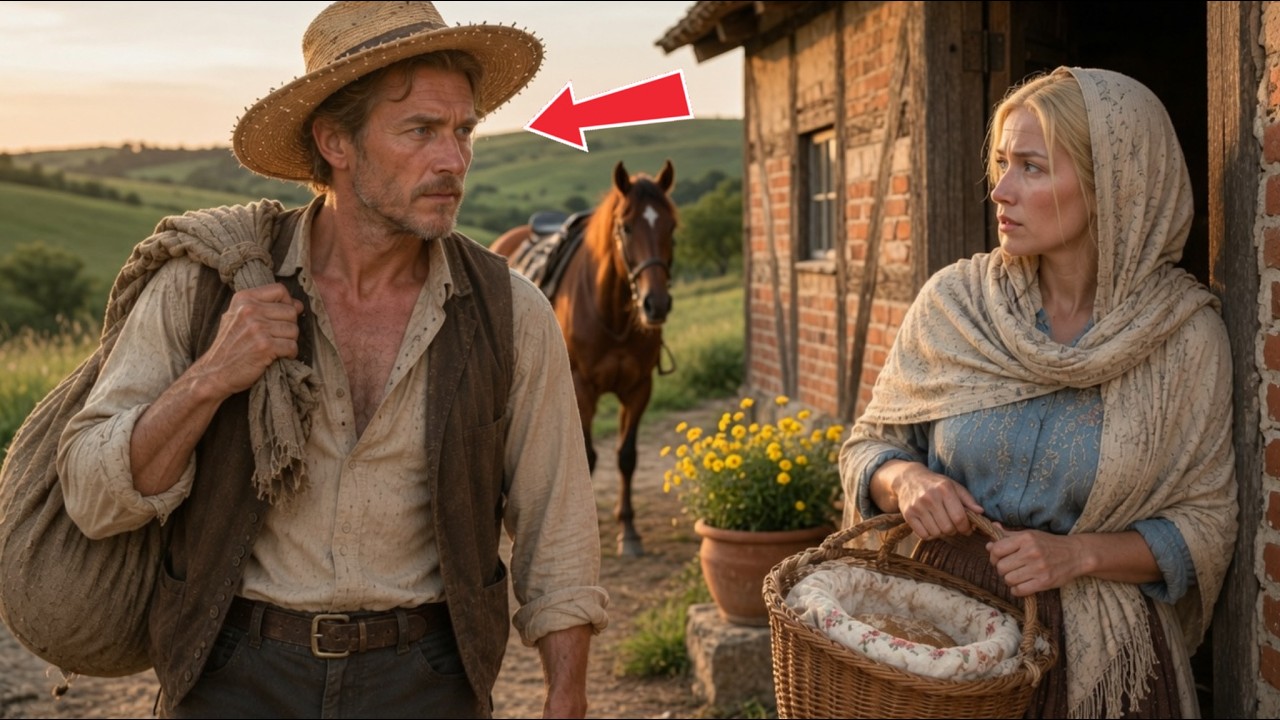
No one in the village imagined that the baron was about to disappear from his own life. At the estate’s main building, Henrik of Valdemar adjusted a worn shirt before the mirror, a garment that had belonged to a deceased farmhand many years ago. He ran his hand over his several-days-old beard, which he had deliberately let gray, studying his reflection as if examining a stranger.
“Are you sure about this, Baron? ” asked Mats from the door, arms crossed, his cap still on, as if that could stop what he knew was unavoidable. “I have never been more sure of anything, Mats. For eight years I have met women who smile at my fortune before they smile at me.
Last week I heard the Olesen family discussing in church which of their daughters had the best chance of making me inherit the estate, as if I were a lottery prize. ”
“And you think that disguised as a farmhand you’ll find what you’re looking for? ”
“I think that if anyone ever looks at me without knowing I own all this, I’ll know if there is still anything in me worth looking at. ”
Henrik took the old horse, a work animal he had traded for his stallion that same morning, and left the estate by the least traveled road, leaving behind twenty years of administration and an entire identity locked away like a coat too heavy to wear.
Before leaving, however, he stopped for a moment before the portrait of his late wife, Ingeborg, which still hung in the main corridor. He had avoided looking at it properly for years, but that morning he allowed himself to stand before it for a long time. “I don’t know if this is what you would have wanted, Ingeborg,” he murmured, as if she could still hear him. “But I have been a shadow of the man I was with you for eight years, and I don’t want to die without knowing if there is still something in me worth loving for who I am, and not for what I have.
”
Mats caught up with him at the main door with a worn leather bag. “Here’s some food for the road, Baron, and a little money hidden inside, in case things get more complicated than you imagine. ”
“I won’t touch that money, Mats. If I can’t survive like any farmhand in this region, then I don’t deserve to call myself a landowner.
”
“With all respect, Baron. You’ve never had to survive without anything. You don’t know what it means to sleep hungry, or to have doors slammed in your face just because of the clothes you wear. ”
Henrik stood thoughtful for a moment, feeling the uncomfortable truth in his steward’s words.
“Then it’s time to learn, Mats. Take care of the estate while I’m gone. And if I haven’t returned in a month, you know what to do with the documents I left in the office. ”
“A month is a long time to wander the roads alone, Baron.
”
“A month is the least I need to know if anyone can still love me without knowing who I am. ”
The storm came without warning, as the worst things always do in the Mid-Jutland landscape. The sky, crystal clear at noon, suddenly closed in with slate clouds. By four in the afternoon, the wind was already tearing leaves from the trees and whining between the stones on the road.
Henrik, who had spent the day asking for work at two nearby farms without ever saying his true name, urged the old horse along a narrow path that curved along a slope, seeking shelter before the rain fell with full force. He didn’t make it. The animal, frightened by a thunderclap that echoed as if splitting the hills in two, slipped in the newly formed mud and fell on its side, dragging Henrik with it. The impact was dry.
Henrik felt a sharp pain in his right leg before the pain spread like fire through the entire limb. He lay stretched out among the stones, soaked, with the horse neighing a few meters away and the rain falling over his face with a persistence that began to feel like a judgment. A cart passed. The man driving it looked down into the slope, hesitated for a moment, and drove on.
Two riders passed. One, seeing the heap lying among the stones, commented something to his companion that Henrik couldn’t hear, but whose tone left no doubt. It was the indifference of someone who has seen too many fallen farmhands on the roads to stop for another. Henrik, who for twenty years had been greeted with raised hats by every person he met on his way, understood in that moment, lying in the mud with his leg swollen under the worn trousers, that the rain didn’t discriminate between landowners and farmhands, but people did.
And that afternoon, people had left him alone. The sky was beginning to darken when Kirsten and Lise returned from the village square with an almost empty basket, except for a little salt and a piece of soap they had managed to buy with the rest of the week’s sales. They walked quickly, trying to outrun the storm, when Lise suddenly stopped. “Mother, there’s a man lying down there.
”
Kirsten followed her daughter’s gaze down into the slope and, in the twilight and now heavily falling rain, discerned the motionless figure of a man beside a horse grazing nervously nearby. She didn’t think twice. She went down the slippery path with Lise by the hand, and when she reached the man, she saw that he was breathing, that he was conscious but pale, and that his right leg, bent at an unnatural angle, prevented him from moving. “Can you hear me?
” asked Kirsten, kneeling beside him, indifferent to the mud soaking her skirt. Henrik opened his eyes and found, through the rain, a woman’s face looking at him without any calculation, only with the direct concern of someone seeing another human being’s life. “I fell,” he muttered. “The horse slipped.
”
“Can you walk? ”
“I don’t know. ”
Kirsten wasted no time on more questions. She looked around, calculated the distance to her house, which was shorter than the distance to any other house in the village, and made a decision she would ask no one’s permission for.
“Lise, hold the horse’s reins. We’re taking him home. ”
The journey was slow and painful. Henrik leaned on Kirsten’s shoulders, and although she was not a large woman, she bore his weight with surprising strength, forged through years of carrying grain sacks and bundles of laundry.
Lise walked behind, leading the horse with a seriousness that made Henrik smile despite the pain, because it reminded him of a determination he himself had lost long ago. They arrived at the house when it was already dark. Kirsten placed Henrik on the house’s only bed, a wooden frame with a thin straw mattress, and lit the hearth to heat water. “Mother, does he have to pay to sleep here?
” asked Lise quietly, with the direct innocence that only children have. “We don’t ask about that, my girl,” replied Kirsten without taking her eyes off the improvised bandages she was preparing. “When someone is hurt, you help first. Then you worry about the rest.
”
Henrik, pretending to have his eyes closed from exhaustion, heard every word and felt something stir in his chest, something he hadn’t felt in years. That night, while the storm still hammered against the roof tiles, Kirsten made a soup with the little she had: a piece of pumpkin, some fragrant herbs, and the last piece of dried meat she had saved for a special occasion. She fed the injured man spoonful by spoonful, for the fever had already begun to rise and his hands were shaking. “Thank you,” said Henrik between sips.
“You didn’t have to do this. ”
“No one has to do anything,” replied Kirsten with a simplicity that seemed more valuable to Henrik than any speech he had heard in his years as a landowner. “But you do it anyway. Or isn’t it worth living in a village like this?
”
Kirsten gave up the bed to Henrik and lay down on the floor next to Lise, wrapped in a thin shawl, listening to the stranger’s labored breathing while the storm outside turned into light rain. She didn’t ask his full name. She didn’t ask where he came from or where he was going. She only asked, before putting out the light, if he was cold.
Henrik, staring at the rusty roof tiles of a cottage he had never in his life set foot in, understood that he had found, without fully looking for it, the first answer to the question that had driven him away from his own estate. At one point in the early morning hours, between the light feverish dozing and the exhaustion after the fall, Henrik remembered the last time someone had cared for him that way without conditions. It had been Ingeborg, months before she died, sitting by his side during a bad flu, holding his hand exactly the same way Kirsten had held his arm when they walked toward the cottage. The comparison tightened his chest, not with pain, but with a kind of quiet wonder at the thought that life, after such a long drought, was still capable of offering him something that resembled selfless care.
Near dawn, the fever rose a little more, and Henrik muttered in confused dreams some words that Kirsten, waking at the groans, didn’t fully understand, except for a name she thought she heard. Ingeborg. She asked nothing, just placed a cool cloth on his forehead and watched over him until his breathing became calm. At daybreak, when the rain finally stopped and the sun began to seep cautiously through the gray clouds, Kirsten went out for a moment to check on the horse, which had spent the night tied under an improvised shelter.
The animal greeted her with a snort. And as she stroked it, she asked herself in a low voice who this man really was, who spoke in his dreams with the name of a woman who was no longer there. And what story lay behind those tired eyes that had looked at her the evening before with a gratitude that seemed too deep to belong to just any farmhand grateful for a bowl of soup. The next morning, when the fever had already subsided, Henrik observed for the first time clearly the hands of the woman who had helped him.
They were thin but strong hands, fingertips hardened by needle and thread, with a small scar on her left index finger that spoke of years of sewing late into the night by candlelight. It wasn’t a hand that begged. It was a hand that built, centimeter by centimeter, a life that no one else maintained. And there was something more Henrik noticed, something that would capture his attention in all the following days.
The way Kirsten moved through her poor house with a straight back, chin slightly lifted, as if lack had no right to bend her body, even though it had tried for years. The following days passed with the particular slowness that characterizes a convalescence. Henrik, who had introduced himself to Kirsten simply as Henrik, without a surname, without a story, stayed in the house while his leg healed enough for him to put weight on it. Kirsten never asked more than necessary.
She fed him, changed his bandages, and when he insisted on paying in some way, she simply said that if he wanted to help, he could carry firewood when he could stand, and with that, any debt was settled. Henrik, who for twenty years had administered the region’s most prosperous estate and had never carried a bundle of firewood, discovered in those days a form of work he didn’t know. The work of someone who has no other options. The work that expects no recognition.
Because recognition doesn’t pay the rent. On the fourth day, at dawn, Henrik saw her fully for the first time without her knowing. Kirsten had gone out before sunrise, as every morning, to knead the bread she would later sell in the village. Henrik, half-awake because of the pain in his leg, watched her from the curtainless window.
He saw her light the oven with movements she had repeated since childhood. He saw her shake the flour from her hands with a nearly mechanical gesture. He saw her stop for a moment with her eyes closed, taking a deep breath before continuing, like someone gathering strength for a day that promised to be just as hard as the previous one. There was no visible complaint in her, no self-pity.
Instead, there was a quiet determination that Henrik couldn’t quite name. Something he recognized, because he had once had it himself, before fortune and loneliness had gradually stripped it from him. That day, without either of them saying it aloud, something changed in the way they looked at each other when they exchanged words. The day turned into a week, and the week into two.
Henrik, leaning on an improvised cane made from a branch, began to help with what he could. Carrying water from the communal well, repairing the fence around the small enclosure where Kirsten kept two skinny hens, chopping firewood, clumsy at first and with increasing skill over time. One afternoon, while Kirsten finished some urgent sewing for a neighbor, Henrik found Lise sitting alone in the yard, drawing clumsy figures in the loose earth with a stick. “What are you doing?
” he asked, sitting down carefully beside her, still protecting his healing leg. “I’m trying to write my name. The village teacher left last year, and no one teaches letters anymore. My mother knows some, but she doesn’t have time to teach me.
”
Henrik felt a pang of indignation hearing this, for at his estate, only a few kilometers away, there was a small library that no one had used since his wife’s death, and dozens of children in situations like Lise’s who had never had the opportunity to learn to read. “I can write quite well,” he said, taking the stick from the girl’s hands. “Would you like me to teach you while I’m here? ”
Lise’s eyes lit up in a way Henrik would never forget.
“Really? Really? ”
“Let’s start with your name. ”
In the following afternoons, while Henrik’s leg healed, it became a habit for him and Lise to sit together in the yard, drawing letters in the earth with a stick, then on a piece of brown paper that Henrik obtained in the village, until the girl could write her full name, and then her mother’s name, with clumsy but proud handwriting.
Kirsten, watching from the window those afternoons while she sewed, felt something stir deep in her chest. To see the patience with which this man, with no obligation to do so, spent whole hours teaching a child who wasn’t his own to read. No other man, not even Søren, in the years they were married, had ever spent that kind of time with Lise. And this silent, constant observation built in Kirsten a trust that no amount of words could have built with the same force.
“One day I’ll be able to read whole books, like the ones they say exist at the big estates,” said Lise one afternoon, with the absolute determination that children who don’t yet know limits possess. “One day you’ll be able to read all the books you want, Lise. I promise you that. ”
Lise, who at first had looked at him with the natural distrust children have toward strangers, ended up adopting him as if he were part of the family.
She told him about the stones she collected in the yard, made up stories along the way. And one afternoon, without warning, she took his hand as they walked toward the well. “Why are you always sad? ” the girl asked him one afternoon, while he carved a wooden figure with an old knife, a little horse for her.
Henrik paused for a moment, surprised by the direct question. “I’m not always sad, Lise. ”
“Yes, you are. I can see it in your eyes when you think no one’s looking.
”
The girl returned to her game, unaware of the weight of what she had just said, while Henrik felt that this seven-year-old child had in a moment seen what none of the women who had tried to court him at the estate had even attempted to see. It was Mrs. Johanne Schmidt, the village’s wise woman and an old friend of Kirsten’s mother, who first noticed the change. “That look you have isn’t the look of someone caring for a sick person,” she said to Kirsten one afternoon, while they both selected herbs in the wise woman’s garden.
“That’s the look of someone who has already begun to care for someone without knowing it. ”
“Don’t talk nonsense, Mrs. Johanne. That man has nothing, just like me.
In a few days he’ll leave to find work elsewhere, and we won’t hear from him again. ”
“Sometimes it’s those who have nothing who have the most to give,” replied the old woman without lifting her eyes from the leaves she was sorting. “And sometimes, my daughter, the heart doesn’t ask whether it’s convenient or not. ”
Kirsten didn’t answer, but that evening, while serving dinner, she caught herself observing Henrik’s hands with the same attention with which he observed hers, noticing how they had become covered with small calluses from the work he wasn’t used to doing, and felt, against all her will to hold back, that something softened in her chest every time he smiled.
The first Sunday after Henrik could walk without a cane, Kirsten asked him to accompany her to sell bread at the village square, as Lise had stayed home with a slight fever under Mrs. Johanne’s care, and she needed an extra pair of hands to carry the basket. The square in Himmelbjerg was a small bustling world, set up every Sunday on the main street, full of vegetables, fabrics, livestock, and sweets that village women sold under patched awnings. Henrik, used to people tipping their hats when he passed, discovered that morning what it meant to walk among the crowd without anyone noticing him.
Pushed by strangers’ elbows, ignored by merchants who barely gave him a glance before turning to Kirsten to trade. “Carry it carefully, because if that basket falls, we lose the whole week’s profit,” warned Kirsten, handing him a basket full of still-warm bread loaves. “Do you always come alone to sell? ”
“I used to come with my husband.
After his death, I learned to carry twice as much without anyone’s help. ”
Henrik said nothing but felt a pang of something like shame as he remembered that he, on the other hand, had never had to learn to carry anything alone, because there had always been a Mats, a foreman, an employee willing to do it for him. During the morning, while Kirsten negotiated with practiced skill, Henrik observed how she treated each customer with firmness when someone tried to pay less than the fair price, with quiet generosity when an elderly woman didn’t have enough to pay for a piece of bread. And Kirsten, without a word, gave it to her anyway, minimizing it with a hand gesture.
“What did you do with the lady a moment ago? ” asked Henrik when they gathered the empty baskets in the late morning. “Did you give her the bread? ”
“I didn’t give it to her.
I wrote it down. She always pays when she can, and if she never can, then she’s eaten something this week, and that’s the only thing that really matters. ”
That answer, said with such naturalness, lingered in Henrik’s mind on the way back to the house. He understood that he was facing a form of generosity completely different from the one he knew.
Not the calculated generosity of someone who donates part of their surplus to feel good, but the generosity of someone who gives out of lack, because they can’t imagine another way of living among their fellow human beings. It happened late one afternoon in April, when Henrik’s leg was almost completely healed but he still found excuses to stay one more day, and then another. Kirsten was sewing by the window, using the last evening light to mend a shirt for Lise, when the silver thimble on her finger slipped off and fell to the floor, rolling until it stopped at Henrik’s feet. He bent down to pick it up.
It was a small thimble, worn by use, with a nearly erased initial engraved at the base. An M for Marie, the name of Kirsten’s mother. “It was my mother’s,” said Kirsten, reaching out her hand to receive it. “It’s the only thing I have left of her.
”
Henrik didn’t give it back immediately. He held it for a moment between his fingers, feeling the light weight of this object that represented, he understood without anyone explaining it to him, an entire lifetime of work inherited from generation to generation. A whole dignity that could neither be bought nor sold. “It must weigh a lot to be so small,” he said.
And instead of letting it fall into Kirsten’s open hand, he gently closed her fingers around the thimble and held her hand in his a moment longer than necessary. Neither of them said anything more. Kirsten felt the warmth of his rough hands, recently hardened by work, envelop hers. And for a moment, the only sound in the house was the crackling of the hearth and the distant song of a blackbird perched on the yard’s roof.
Outside, the sky turned orange and purple, and neither of them took their eyes off the other until Lise ran in asking if dinner was ready. That evening, after the girl had fallen asleep, Kirsten lay awake looking at the thimble in her hands, wondering what kind of man it was who had come into her life without a full name, without a past to tell, and yet with such a simple gesture made her feel something she thought was buried with her husband three years earlier. Henrik, for his part, sat that evening in the yard under the stars, and for the first time since his wife’s death, he felt that the emptiness he carried inside wasn’t the same as always. It hadn’t disappeared, but something very slowly was beginning to fill it again.
The days passed. Henrik decided to postpone his return to the estate once more, with the excuse that his leg still needed strength, even though he knew, and Kirsten probably also knew, that the true reason was different. He helped with the sewing by bringing fabric to other houses in the village. He learned to bake bread under Kirsten’s patient instruction.
And in the evenings, when Lise slept, they sat together outside the house, talking about everything and nothing, carefully avoiding, by silent agreement, talking about both their pasts. “Did you never have a family, Henrik? ” asked Kirsten one evening, looking at the stars. “I had a wife,” he answered cautiously.
“She died many years ago. Since then, I’ve been alone. ”
“I’m sorry. ”
“You don’t need to be.
One learns to live with absence, even though one never quite gets used to it. ”
Kirsten nodded, understanding that sentence better than anyone, for she too had lost her husband in an accident in the fields when Lise was only two years old. “Sometimes I think life takes what we love most, just to see if we’re able to stay standing,” she said. “And you’re still standing,” replied Henrik, looking at her with an intensity that made Kirsten lower her gaze, blushing.
It was in those days of quiet companionship that they both, without ever naming it, began to build something that neither of them knew how to stop, or how to begin to call by its true name. Another evening, when Lise was deeply asleep, Kirsten and Henrik sat outside the house longer than usual, surrounded by the night’s fresh silence. “What did you dream of as a young person, before life laid all those burdens on you? ” asked Henrik, genuinely curious.
For until then, he had only known Kirsten in her role as mother and tireless worker, without having stopped to ask her who she had been before all of it. Kirsten was thoughtful for a long moment, as if digging up a memory she hadn’t visited in years. “I wanted to be a teacher,” she admitted finally, with a nostalgic smile. “When I was a child, the village teacher let me help with the little ones, and I dreamed of studying in the capital, to one day return and have my own school.
But my parents died young. I had to take care of my younger siblings. Then I married Søren, and that dream was put away in a drawer I don’t even remember where I put it. ”
“You could still fulfill it.
”
Kirsten let out a gentle laugh, without bitterness, but also without too much hope. “At thirty-two, a widow with a daughter and barely a plot of land to defend, there’s not much room to dream about schools, Henrik. One learns to save those dreams for one’s daughters, not for oneself. ”
“And what did you dream of?
” she asked, returning the question with a curiosity she hadn’t felt in a long time for another’s life. Henrik hesitated, aware that a fully honest answer would dangerously reveal who he really was. “I dreamed of having a large family. Children running around the fields, an old age with company.
Life gave me something else. It gave me work, responsibility, and then took away the only person I thought I would build all that with. ”
“I’m sorry. ”
“Don’t be.
” Henrik sought her gaze in the twilight. “Because sometimes I think that life didn’t take that dream from me forever. It just put it on pause, waiting for the right moment to give it to me in a different way. ”
Kirsten felt that these words carried a weight that went beyond the obvious, even though she didn’t dare ask exactly what he meant, and both fell silent for a while, looking at the stars beginning to peek through the last clouds from the storm that had spread that evening.
In mid-April, the whole village was preparing for the annual feast for Himmelbjerg’s patron saint. A festival that included a procession, band music, fireworks, and a dance on the square that brought together families from all the surrounding farms. Kirsten, who in previous years had only participated for a short time, carrying the sleeping Lise in her arms before returning home early because she had no one to leave her with, this time let herself be persuaded by Mrs. Johanne to stay until the last piece of music played.
“Go now, my daughter, have a little fun. Life isn’t only work and worries,” said the wise woman, pushing her gently toward the illuminated square with paper lanterns. Henrik, who had helped carry tables and benches to the feast along with other men from the village, found himself that evening observing Kirsten from a distance, dressed in her only good dress, faded blue from the years but carefully ironed, laughing with other village women with a freedom he hadn’t seen in her before. Lise, already feeling better from her fever, ran among the village children chasing a wooden hoop.
And for a moment, seeing the girl without worry, Henrik felt that this small poor village contained something that the estate’s wealth had never managed to give him. A sense of simple belonging, without pretensions, without calculations. When the band began to play a slow waltz, several couples ventured out to dance in the middle of the square. Henrik, overcoming a shyness he hadn’t felt since his youth, approached Kirsten.
“Would you grant me this dance? ” he asked, extending his hand with a gesture that, without him noticing, still preserved something of a landowner’s elegance, even though he was dressed in farmhand’s clothes. Kirsten hesitated for a moment, aware of some neighbors’ curious looks, but finally accepted, and both moved clumsily at first, then with more ease among the other couples spinning under the lanterns’ warm light. “It’s been a long time since I danced,” admitted Kirsten with red cheeks, though she didn’t know if it was from exertion or closeness.
“Me too,” answered Henrik. And it was true, although for reasons she couldn’t imagine. They danced two more pieces, and when the music stopped to make room for the fireworks announcing the end of the procession, they both stood facing each other, breathless, without really knowing what to say after a moment that neither of them had planned or expected. “I think we should look for Lise,” said Kirsten finally, breaking the moment with a nervous smile.
“Yes, of course. ”
But neither of them moved at once, and for a second, with the distant rumble of fireworks overhead, their hands remained intertwined a little longer than necessary before they both, almost simultaneously, decided to let go and return to the caution that had accompanied them from the first day. Toward the end of April, when Henrik’s leg was almost completely recovered, a neighboring landowner, who had not yet been pressured by Proprietor Frederiksen, temporarily hired several day laborers from the village, including Kirsten and, for the first time, also Henrik, to help harvest a wheat field before the heavy May rains began. The work was brutal for someone who had never spent a full day under the sun cutting wheat with a scythe.
His back hurt after the first hour. His hands, already hardened by weeks of lighter work, became covered with new blisters, and sweat ran incessantly down his forehead under the straw hat Kirsten had lent him. “Don’t stop for so long between each cut, Henrik. Otherwise we won’t finish before the rain arrives,” said Kirsten, without stopping herself, working with a constant rhythm that Henrik admired more and more.
“We’re not all born with your endurance, Kirsten,” he answered between gasps, which drew a genuine laugh from her. At the end of the day, exhausted as he had never been in his entire life as a landowner, Henrik sat with the other day laborers to eat rye bread with herring, which the women of the farm distributed as partial payment for the day’s work. And he felt, in this shared exhaustion, a simple brotherhood he had never experienced, sitting at his own table at the estate surrounded by silver cutlery and served by others. “Kirsten, I think I never really understood what work means until today,” he confided to her that evening on the way back to the house, his whole body sore but with a strange feeling of fullness.
“Work isn’t a punishment, Henrik, even though it sometimes exhausts the body to the bone. It’s what keeps our heads high when everything else seems to want to bend us. ”
That night, Henrik slept as he hadn’t slept in years, without the emptiness nightmares that used to visit him in his lonely bed at the estate, rocked instead by the honest fatigue of a day of real work alongside the woman who, without him fully knowing it, had become the quiet center of his entire life. One Saturday afternoon, Kirsten decided to make meat soup.
A dish she only made on special occasions, since the ingredients, although modest, required a little more expense than she could allow herself every week. This time, since the bread sales at the market had been slightly better than usual, she decided to treat herself and asked Henrik to help her grind the spices in the stone mortar that had belonged to her grandmother. “I’ve never used one of these,” admitted Henrik, holding the mortar clumsily. “You can tell,” laughed Kirsten.
A clear and genuine sound that Henrik was already beginning to cherish. “See, like this, with your body’s weight, not just your arm’s. ” She stood behind him and guided his hands over the stone with a closeness that neither of them commented on aloud, although they both felt the warmth of this proximity like a quiet current. Henrik, clumsy at first, found the rhythm under Kirsten’s guidance, crushing the dried spices until they became a thick and aromatic paste that filled the house with a spicy deep scent.
“My grandmother used to say that food tastes different when it’s made with the hands of someone you care about,” commented Kirsten without thinking too much about the weight of her words, before she had already said them. And then she blushed a little, concentrating again on the mortar to hide it. Henrik, perfectly sensing the blush, decided not to point it out, but stored the sentence in his memory like a small treasure. They cooked together the whole afternoon, with Lise helping to chop onions amid laughter over the stinging eyes.
And when they finally sat down to eat, as the sun was already setting over the hills, Henrik tasted the soup with an attentiveness that surprised Kirsten. “How is it? ” she asked expectantly. “It’s the best thing I’ve eaten in years,” he replied in all sincerity.
For in fact, none of the feast meals he had tasted at the estate in his life had that special flavor of something prepared with a woman’s calm hands, who put the same care into every dish as she maintained throughout her entire life. That evening, while they washed the dishes together by candlelight, Henrik understood that he no longer merely admired Kirsten for her strength and dignity. He had, without being able to avoid it, begun to build a small and simple everyday life together with her, which he valued in his heart more than any luxury he had known at the estate. As often happens in small villages, it didn’t take long before a stranger’s prolonged presence in a widow’s home became a topic of conversation among the women who met every afternoon at the communal washing place.
“That man has now been living with Kirsten Jensen for over a month,” commented a neighbor, scrubbing a shirt against the washing stone. “And no one knows where he came from or where he’s going. ”
“They say he’s a good worker,” replied another woman, in a tone that made it clear that good will didn’t completely remove suspicion. “But they also say they’re already too close to be just a grateful farmhand and the woman who saved him.
”
The rumor eventually reached Kirsten’s ears through Mrs. Johanne, who told her without mincing words one afternoon while they selected herbs together. “I don’t care what they say, Mrs. Johanne.
That man hasn’t done anything inappropriate, and neither have I. ”
“I know that, my daughter, and I’m telling you this not to worry you, but so that you’ll be prepared. In these villages, tongues move faster than the truth, and sometimes they end up harming those who deserve it least. ”
Kirsten, however, decided not to be frightened by the rumors.
She continued her routine without hiding Henrik’s presence or justifying it to anyone, convinced that her conscience was clear and that others’ opinions, no matter how harsh, weren’t worth the price of refusing the help she had given an injured man. Henrik, when he heard about the comments from Kirsten’s own mouth, felt a new pang of guilt, aware that his presence, without either of them having sought it, was putting a woman’s reputation at risk. A woman who already bore enough difficulties without needing to add the weight of village gossip. “If my presence is causing you problems, I can leave,” he said that evening, sincerely.
Although the thought of leaving in itself squeezed his chest in a way he hadn’t expected. “You’re not going anywhere, Henrik,” replied Kirsten firmly, surprising herself with the speed and certainty of her answer. “Village tongues won’t decide who comes in and out of my house. ”
Two weeks after the feast, Mats Nielsen, worried about his baron’s prolonged absence, approached the village disguised as a fabric merchant, with the pretext of selling goods door to door, to see with his own eyes that Henrik was still alive and without serious problems.
He found him chopping wood behind Kirsten’s house, shirt sleeves rolled up and face tanned by weeks of sun. So different from the pale and withdrawn man who had left the estate that Mats hesitated for a moment to fully recognize him. “Baron,” he murmured, approaching cautiously when he saw there was no one else nearby. “You’ve made me worried.
I almost sent for you with the rural police. ”
“Mats, what are you doing here? If anyone recognizes you, everything could get complicated. ”
“I came disguised.
Don’t worry. But I had to see with my own eyes that everything was in order. It’s been almost three weeks. ”
Henrik lowered the axe and wiped the sweat from his forehead with the back of his hand, a gesture that now came naturally without the clumsiness of the first days.
“Everything is in order, Mats. Better than in order. ”
“I can see that, Baron, if I may say so. I haven’t seen you like this in years.
”
“There’s a woman, Mats. Her name is Kirsten. And there’s a girl, Lise, who has stolen my heart without me being able to do anything to prevent it. ”
Mats smiled.
A genuine smile that contrasted with the worry he had carried for weeks. “I’m glad, Baron. Truly glad. But I also want to tell you something you may not want to hear.
The longer you go without telling this woman the truth, the harder it will be when she finally finds out. And she will find out, Baron. Sooner or later, the truth always comes out in these villages. ”
“I know.
I’m looking for the right time. ”
“I’m just asking you not to wait too long. Trust is like freshly baked bread. It tastes better the fresher it is.
”
Henrik was thoughtful after Mats left, his steward’s warning ringing in his head for the rest of the afternoon. While Kirsten, completely unaware of this visit, continued preparing dinner without suspecting that the man who was warming her heart carried a secret that was becoming heavier and heavier to bear. One afternoon of light rain, when Henrik accompanied Kirsten to bring some herbs to Mrs. Johanne, the old woman shared a fragment of her own story, which she rarely told to anyone.
“I also had such a man many years ago,” she said, serving coffee in three earthenware mugs. “A traveling merchant who passed through this village with goods for the capital. We loved each other for two whole years, until one day he left, promising to return, and never returned. I never knew if he died on the road or simply found another life elsewhere.
I waited so long that by the time I finally understood he wouldn’t come back, the years for having my own children had already passed. ”
“I’m so sorry, Mrs. Johanne,” said Kirsten, taking the old woman’s wrinkled hand. “Don’t be sorry, my daughter.
From that sorrow, I learned to heal others, because I understood that pain that isn’t healed in time becomes slow poison. That’s why I say to you both, even though you haven’t asked me anything, don’t let the fear of losing prevent you from having what life offers you right now. ”
Henrik felt these words, spoken without knowing his true situation, pointed directly at the burden he had carried for days. And that evening, walking back in the rain, he was on the verge of telling Kirsten everything.
The words gathered in his throat, ready to come out. But when he saw the calm with which she walked by his side, simply enjoying the fresh rain on her face, he decided to wait one more day, unaware that that one more day, without him planning it, would be the difference between telling the truth of his own free will, or having the truth catch up with him first through the force of circumstances. It was only four days later that Lise woke up with a high fever, glassy eyes, and a dry cough that deeply worried Kirsten. Mrs.
Johanne came immediately with her herbal remedies but warned that if the fever didn’t drop by dawn, it would be necessary to find the doctor from the neighboring town, a journey of almost two hours by horse. Henrik, without anyone asking him, stayed up the whole night with Kirsten. They took turns placing damp cloths on the girl’s forehead, warming water, supporting Kirsten when exhaustion and fear threatened to break her. “I couldn’t lose her too,” murmured Kirsten at one point in the early morning hours, her voice broken, referring without saying it openly to the fear she had carried since Søren’s death.
The fear that life would again tear someone she loved away from her. “You won’t lose her,” said Henrik, taking her hand firmly. “This girl has the same spirit as her mother. She’ll get through this.
”
Near dawn, the fever finally dropped, and Lise slept peacefully for the first time in hours. Kirsten, exhausted, fell asleep sitting at her daughter’s bedside. And Henrik, without thinking too much about it, covered her with a blanket and watched over them both until the sun rose. It was in this silent vigil that he understood there was no way back.
He felt that he belonged to this small family that life, in the most unexpected way, had placed on his path. Meanwhile, at the neighboring estate, Proprietor Frederiksen received with increasing displeasure reports that Baron Henrik of Valdemar, the region’s wealthiest landowner, had disappeared without a trace for almost three weeks. “This is the opportunity we’ve been waiting for,” he said to his steward, a thin man with an evasive look named Svend. “Without Henrik at the head of the estate, and with that stubborn widow who refuses to sell her land, it’s time to move the pieces.
”
Frederiksen had for years coveted the small plots of land surrounding the estate. Areas that, combined, would have given him control over access to the stream and over a large part of the region’s trade routes. Among those plots was precisely the small piece of land inherited by Kirsten Jensen from her parents. A piece of land worth very little in money, but strategically a key piece in his plans.
“Cut off access to the stream that woman uses to wash and water,” ordered Frederiksen. “Talk to the village merchants, let no one buy bread from her. And talk to the farmers who hire her for the harvest. Let no one give her work.
And if she doesn’t give in, Baron, then we’ll bring out the documents. ”
Months earlier, Frederiksen’s first approach to Kirsten had seemed polite. He had introduced himself one Sunday after the service and offered her a sum that for any other woman in the village would have seemed generous, arguing that a lone widow didn’t need to bear the burden of maintaining a plot of land. “I thank you, Proprietor Frederiksen.
But this plot of land is the only thing my parents left me. And here I intend to stay,” Kirsten had answered then, without suspecting that this polite refusal would, over time, trigger an increasingly aggressive pursuit. Frederiksen, accustomed to no one saying no to him twice, had interpreted this refusal as a personal challenge. And with the calculated patience of someone who has learned to wait for the right moment, he had begun to activate his contacts and influence to gradually suffocate Kirsten’s means of supporting herself without her plot of land.
Kirsten began to feel the effects in the last week of April. The village baker, who always bought part of her production, said with visible discomfort that he could no longer continue. Two families who used to hire her for sewing told her, almost with shame, that they had decided to find another seamstress. And one morning, when she went to get water from the stream that ran near her land, she found the path blocked by a new barbed wire fence that hadn’t been there the day before.
“Someone is doing this on purpose,” she said to Mrs. Johanne, her voice filled with an anxiety she tried to hide. “I don’t know who or why, but I feel that all doors are closing for me at the same time. ”
“You know well who it is, my daughter.
Everyone in the village knows that Proprietor Frederiksen has wanted this land for years. ”
Kirsten clenched her nerves and felt a mixture of fear and anger she hadn’t felt since her husband’s death. “I have no way to fight against a man like him. ”
That evening, when Henrik noticed the tension in Kirsten’s face, he asked what was going on.
She hesitated for a long moment before answering, and when she did, she didn’t mention Frederiksen by name or tell the full details. “I’m having problems with the land,” she said quietly. “But you don’t need to worry. It’s not something you can help with.
”
Henrik felt a pang of frustration hearing these words, understanding that Kirsten, believing him as poor as herself, would never think to ask him for help in standing up to a man with Frederiksen’s power. And for the first time since he had come to this house, he felt the weight of his disguise as an overwhelming burden. That same evening, after Lise had fallen asleep, Henrik sat down with Kirsten in the yard, determined to tell her at least part of the truth. “Kirsten, there’s something I need to tell you.
”
She looked at him expectantly, with those dark eyes that had learned to read every one of his gestures in the last few weeks. “I’m not quite who you think I am,” he began, feeling the words stick in his throat for the first time in his life. “I have, I have more resources than I let on. I could perhaps help you with the land problem.
”
Kirsten looked at him with an expression that mixed surprise and a sudden hardness that Henrik hadn’t seen in her before. “What are you saying? ”
“I’m saying that if you let me intervene, I could perhaps talk to whoever is causing these problems, or find a way to… ”
“No.
” The word came firm, sharp. “I don’t need anyone to speak for me, Henrik, neither you nor any man. If you have some savings hidden that you haven’t told me about, thank you for that. But this is something I have to solve myself.
It’s already cost me enough pride to let you stay in my house without charging you. I won’t become the kind of woman who depends on a farmhand to save her land. ”
Henrik understood with painful clarity that he had underestimated the depth of Kirsten’s pride, and that a half-hearted offer without the full truth behind it sounded exactly like what she feared most. Pity disguised as generosity.
That evening, while Kirsten slept, Henrik went out into the yard and was on the verge of saddling the horse and leaving forever, convinced that his mere presence, with the secret he carried, could only bring more complications for a woman who already had enough. He thought that perhaps it would be most honest to disappear without explanations, letting Kirsten solve her life without the extra burden of a stranger who couldn’t even offer her the full truth. He had his hand on the animal’s halter when he heard a small voice behind him. “Are you leaving, Henrik?
”
It was Lise, who had woken up and was watching him from the cottage door, wrapped in her shawl, with an alarmed expression that squeezed his heart. “No, my girl,” he replied, letting go of the halter immediately. “I just came to check that the horse was properly tied. Go back to sleep.
”
“Promise me. Because my mother says she doesn’t say it, but I know she already cares about you very much, and I care about you very much too. If you leave, we’ll both be very sad. ”
These words, spoken with the brutal honesty that only children have, convinced Henrik finally that escape was not an option, and that the only worthy way out was to solve Frederiksen’s problem from his true position, and then face the consequences of the truth, no matter how painful they might be.
“I promise you, Lise. I’m not going anywhere without saying a proper goodbye. ”
The girl, satisfied with the answer, went back to bed, and Henrik stayed long in the yard under the stars, finally making the decision that would set the direction for the following days. Two days later, while Henrik had left early with the pretext of seeking work at a nearby farm, in reality riding back to the estate to meet secretly with Mats, Proprietor Frederiksen personally appeared at Kirsten’s house, accompanied by two armed men who waited sitting on horseback at a distance.
“Good morning, Mrs. Jensen,” said Frederiksen, taking off his hat with a politeness that didn’t reach his eyes. “I’ve come to offer you one last time a dignified way out of your situation. ”
Kirsten, with Lise hidden behind her, kept her back straight and her gaze steady.
“I have nothing to discuss with you, Proprietor Frederiksen. This plot of land is mine, inherited from my parents, and it’s not for sale. ”
“I’m afraid the law will soon say otherwise. ” Frederiksen took a folded document from his jacket and showed it without handing it over.
“I have here a deed proving that these lands have always belonged to the boundaries of my estate. A registration error many years ago mistakenly assigned them to your family. I can resolve this in two ways. You accept a reasonable compensation and move with dignity.
Or I present these documents to the district judge, and you lose everything without receiving a single crown. ”
“Those documents are false. ”
“And you’ll prove that how, Mrs. Jensen?
With what resources? ”
Frederiksen smiled. A cold smile that left no doubt about what he was capable of. “You have one week to decide, madam.
I suggest you don’t gamble on a pride you can’t afford. ”
Before withdrawing, Frederiksen made an extra stop at an old neighbor named Old Rasmus, whose small plot was also among those he coveted, and warned him with the same cold smile that any help he gave the woman would have direct consequences for his own family. Old Rasmus, frightened, stopped talking to Kirsten for weeks. And this silence, born of fear, became for her further proof of how far Frederiksen was willing to go to get what he wanted.
That evening, after Lise had fallen asleep, Kirsten sat alone in the yard with her mother’s silver thimble between her fingers, turning it slowly as she mentally reviewed all the options she had to confront a man with Frederiksen’s power and resources. She found no clear way out. She could talk to the district judge, but she knew that a widow’s word without resources weighed little against an influential landowner’s documents, false or not. She could seek help from neighbors, but most already lived under fear of Frederiksen’s reprisals.
She clenched the thimble in her hand, felt the cold metal against her palm, and for the first time in a long time allowed herself to cry quietly, not from defeat, but from pure accumulated weariness through three years of carrying every single battle in her life alone. She briefly considered telling Henrik everything, asking him for real help, but her pride, the same pride that had kept her standing since Søren’s death, prevented her from imagining the possibility of becoming a burden to a man who, as she knew, had even less than she did to offer. “We’ll get through this, Mother Jensen, as we always do,” she murmured to herself, repeating the phrase her own mother used to say in the hardest moments. And with that inherited determination, she dried her tears and went back into the house, determined not to let Lise see her defeated the next day.
This scene, which Kirsten didn’t tell anyone out of shame and to avoid worrying Henrik with something she considered her personal burden, nevertheless reached Henrik’s ears two days later when Mrs. Johanne, worried about Kirsten’s paleness, told him without knowing that she was speaking to the only man in the region with sufficient power to stop Proprietor Frederiksen. “That Frederiksen has been pressuring poor Kirsten for weeks,” said the old woman, handing him a chamomile for his nerves. “False documents, threats, armed men in front of her house, and she, like her mother, won’t ask anyone for help.
”
Henrik felt the blood boil in him in a way he hadn’t felt for years. Not wounded pride at knowing Kirsten didn’t trust him enough to ask for help, but pure anger at knowing that someone was threatening the woman and girl who, without having tried, had again given him a reason to get up every morning. That same evening, while Kirsten slept, exhausted from the tension of the last few days, Henrik left the house without a sound, mounted the horse Mats had left hidden near the village, and rode back to the estate under the full moon. Before leaving, however, there was a brief but decisive moment.
Mrs. Johanne, who had gone out to gather night herbs from the house, came across Henrik just as he was about to leave, and something in the old woman’s gaze told him that she knew, or at least suspected, much more than she said. “Go where you need to go, young man,” she said without further preamble. “But when you return, return with the full truth in your hands.
That woman has lost too much in life to also lose trust in someone who began to give her the desire to love again. Don’t break that, even if your intentions are good. ”
Henrik stood for a moment looking at her, surprised that the old woman had perceived so much without him saying a word. “I don’t intend to break anything, Mrs.
Johanne. I intend to fix everything. ”
“I hope so. For Kirsten’s heart doesn’t have much more to give if it’s betrayed again.
”
These words lingered in Henrik’s thoughts all the way back to the estate, like a warning and a promise at the same time. When Henrik arrived at the estate after midnight, he found Mats waiting for him in the main office, exactly as they had agreed weeks earlier in case of an emergency. “I need you to gather everything we have on the properties bordering Frederiksen’s estate,” said Henrik, taking off the worn farmhand clothes for the first time in weeks. “And I need to speak with Notary Mortensen tonight, even if we have to drag him out of bed.
”
“What’s happening, Baron? ”
“Frederiksen is trying to steal land from a widow in the village with forged documents. And that widow, Mats, is the woman who saved my life three weeks ago. ”
Mats, who knew his baron well enough to recognize the determination in his voice, asked no more questions and immediately set to work.
In the following three days, Henrik deployed all the machinery his position allowed. He hired a lawyer from the capital, a meticulous man named Advocate Schmidt, who traced the forged document’s origin back to a corrupt clerk who had received a significant payment from Frederiksen three months earlier. He gathered witnesses, including two employees from the district office willing to testify under oath about the irregularities in the registration. And he obtained a certified copy of the original property registration, which undoubtedly showed that the land had legally belonged to the Jensen family for over forty years.
Mats silently observed the baron’s return with rising hope. Even before meeting with Advocate Schmidt, Henrik stopped for a moment in the main office, where Mats was already waiting with a lit oil lamp and a tense face. “Baron, before you begin all this, I have to tell you something,” said Mats, closing the office door carefully. “While you were away, rumors circulated at the estate that you might not return.
Some farmhands began to get restless, and two families who rent land at the edge came to ask me if they should find another baron before the property changed hands. ”
Henrik felt the weight of this revelation, understanding that his prolonged absence had not only put his own personal quest at stake, but also the stability of dozens of families who depended on the estate for their livelihood. “What did you tell them? ”
“I told them a half-truth, that you were dealing with a very important personal matter and would return soon.
I trusted that it would be so, Baron, because I’ve known you since you were young, and I know you would never abandon what your father and grandfather built. ”
“I won’t let them down, Mats. Neither them, nor Kirsten, nor anyone else who depends on me. I just need to solve this the right way.
”
“I know, Baron. That’s why I’m working here at this night hour instead of sleeping, because I trust that, whatever the result, you’ll do the right thing for everyone involved. ”
The investigation was not simple. The corrupt clerk, a man named Kasper Eriksen, initially refused to cooperate, fearing Frederiksen’s reprisals, until Advocate Schmidt made him aware that the alternative was bearing the entire criminal responsibility for the forgery alone, while the real mastermind went free.
“You can continue to protect a man who will never lift a finger for you when this is discovered. Or you can cooperate with justice and save at least your own skin,” said the lawyer, sitting opposite him in a discreet office in the capital. After a whole sleepless night, he finally signed an affidavit detailing how Frederiksen, months earlier, had paid him a significant sum to alter the district’s property register and create a false deed assigning Kirsten Jensen’s land to Frederiksen’s estate. With this statement in hand, Henrik and Advocate Schmidt traveled to the Reich Archive in the capital, where, after hours of searching among dusty files, they found the original property registration, dated more than forty years earlier, which undoubtedly confirmed that the land had been legally granted to Kirsten’s grandfather, then passed by direct inheritance to her father, and finally to her.
“With this and the clerk’s affidavit, Baron, we have more than enough,” said the lawyer, closing the portfolio with a snap. “Frederiksen has no way to sustain his claim before a judge. ”
Henrik felt, for the first time in days, that he could breathe with some relief, even though the burden of knowing that Kirsten still stood alone against Frederiksen’s pressure, without knowing help was on the way, didn’t allow him to rest completely. With all the evidence in hand, Henrik presented himself to District Judge Petersen, a respected man, and laid out the entire case, including the proof of the document falsification orchestrated by Frederiksen.
“This is enough for an immediate summons, Baron Henrik,” said the judge, reviewing the documents with a furrowed brow. “And enough to initiate a criminal case for forgery, if you decide to take it all the way. ”
“I want Mrs. Jensen immediately protected.
The rest, we’ll decide later. ”
Meanwhile, in the village of Himmelbjerg, Kirsten was living through the most anxious days since her husband’s death. Frederiksen had fulfilled his threat to completely cut off any possibility of work for her in the village, and her reserves of grain and bread were beginning to run dangerously low. Moreover, Henrik, the man she had begun to trust more than she had allowed herself to trust anyone in years, had disappeared without explanation three days earlier, leaving behind only a hasty note saying: “Trust me, I’ll return soon.
”
“He left just as he came,” said Kirsten to Mrs. Johanne, with a bitterness she tried to hide but didn’t quite succeed. “Sometimes men disappear to fix things they can’t fix while they’re present, my daughter. Give him time.
”
But time was running out for Kirsten. On the sixth day of the deadline Frederiksen had given, a wagon stopped in front of her house, filled with armed men, and Proprietor Frederiksen himself stood with a triumphant expression he made no effort to hide. “The deadline has expired, Mrs. Jensen.
I have with me the eviction order, signed by the district judge, as well as these men to ensure the move goes properly. ”
Kirsten, with Lise clinging to her skirt, felt the ground opening beneath her feet but kept her back straight, refusing to let Frederiksen see her break down. “This plot of land is mine,” she repeated, her voice barely shaking. “And it will remain mine as long as I have breath to defend it.
”
“Your breath is worth nothing in the eyes of the law, madam. ”
It was at that precise moment, when Frederiksen’s men began to dismount to begin the eviction, that an elegant carriage, drawn by two black horses, which Kirsten had never seen in the village, stopped with a bang in front of the house. From it stepped a man dressed in an impeccable landowner’s costume, polished boots, a wide-brimmed hat embroidered with silver, and a presence that made even Frederiksen’s armed men instinctively step back a step. Kirsten took a moment to recognize under the fine clothes and the newly trimmed beard the same eyes she had cared for for weeks in her own bed, the same eyes that had held her hand by the fire that evening.
Her silver thimble fell from her hand. “Henrik,” she murmured, unable to believe what she saw. Behind him, several people stepped out. Mats Nielsen, the steward, Advocate Schmidt with a portfolio of documents under his arm, an official clerk from the court, and two local authorities Kirsten recognized as direct representatives of the state administration.
“Proprietor Frederiksen,” said Henrik, in a voice Kirsten had never heard from him before. A voice of absolute authority. The voice of Baron Henrik of Valdemar, owner of the estate. “I have irrefutable proof that you forged the deeds for this property, bribing a clerk in the capital to steal land from an honest widow in this village.
”
Frederiksen paled visibly, looking from one face to another, searching for something to say and not finding it. “This is, this is a mistake. ”
“There is no possible mistake, Proprietor Frederiksen,” interrupted Advocate Schmidt, presenting the documents to the official clerk. “We have the sworn statement from the official you bribed.
The original property registration. And a court order immediately annulling any document you have presented. ”
One of Frederiksen’s armed men, seeing the presence of state authorities, immediately lowered his weapon and began to retreat toward his horse, understanding he was on the wrong side of the law. “Furthermore,” continued Henrik, taking a step toward Frederiksen with a steady gaze, “I want it to be clear to everyone present that this woman and her daughter deserve respect, not threats.
And if you ever approach them again, this property, or any person under my protection, you will answer to justice with all the weight my name can exert in this region. ”
Frederiksen, defeated and humiliated before his own men and before the eyes of the whole village, which had begun to gather, drawn by the commotion, mounted his horse without a word and retreated, knowing that he had not only lost the land he coveted, but also a great part of the respect he still had in the region. Among the small crowd that had gathered, some of the neighbors who had previously gossiped about the stranger’s prolonged presence in Kirsten’s house, now looked at each other with a mixture of astonishment and shame, suddenly understanding that the man they had judged a little was in reality the region’s most powerful landowner, and that Kirsten, far from having acted carelessly, had shown a generosity none of them had been able to match. “Blessed be this woman who helps the poor,” muttered the same neighbor who had led the rumors at the washing place, making the sign of the cross with an expression of genuine remorse.
Kirsten stood motionless, looking at Henrik with a mixture of relief and confusion that prevented her from formulating a word. After the clerk formally confirmed that the land was still legally hers, after the authorities had withdrawn, after Mats and the lawyer had discreetly retreated to give privacy to the moment, Kirsten and Henrik finally stood alone face to face, with Lise observing from the cottage door without fully understanding what had just happened, except that Henrik, her friend from the last few days, suddenly seemed like a completely different man. A silence lasted for several long seconds between them, while the dust kicked up by the horses slowly settled, and the afternoon sun bathed the ground in a golden light that contrasted with the tension still hanging in the air. “You are,” began Kirsten finally.
“Baron Henrik of Valdemar,” he finished, in a low, almost ashamed voice. “Owner of the estate. ”
Kirsten took a step back as if the words had physically struck her. Everything she had built in her mind about this man, the wounded farmhand, the humble man who had clumsily learned to bake bread, the silent companion of the nights under the stars, was suddenly rearranged before the truth she was facing.
“All that time,” she said, her voice breaking, “all these weeks, you knew who you were, and you let me, you let me care for you as if you were any farmhand with nothing, when in reality you had greater riches than half this village combined. ”
“Kirsten, let me explain. ”
“I never cared that you were poor, Henrik. ” The tears Kirsten had forbidden herself to cry for weeks, through threats and exhausting work, finally found their way out.
“I never minded sharing the little I had. What hurts me, what really hurts me, is that you never trusted me enough to tell me the truth. You let me believe a lie, while I opened my house, my food, my… ”
She stopped, unable to finish the sentence, unable to say aloud what she had begun to feel for him.
Henrik didn’t try to justify himself. He didn’t say that his intention had been good. He didn’t argue that he had needed to test whether anyone’s love could be genuine without the weight of his fortune. He understood, seeing the genuine pain in Kirsten’s face, that any explanation at that moment would sound like an excuse, and that the only honest thing he could do was accept her pain without immediately asking for forgiveness.
“You have the right to be angry,” he said simply. “And I won’t ask you to forgive me right now, because that would be asking for something I don’t yet deserve. I’m only asking for time. Time to show you, not with words, that the man you met in this house, the one who was clumsy and burned himself learning to bake bread, that man never ceased to exist.
He was only hidden under a fortune that for eight years prevented me from trusting anyone. ”
Kirsten didn’t answer. She took Lise’s hand, went into the house, and slowly closed the door. Leaving Henrik standing in the yard with the bitter certainty that he had won the battle against Frederiksen but had put something far more valuable than any land or fortune at stake.
The following months were, for Henrik, the hardest since his wife’s death, but also the most determined of his entire life. He didn’t try to win Kirsten back with gifts or empty promises. He didn’t show up at her house with baskets of food or offers of money, which she, with her intact pride, would have immediately rejected. Instead, he began to transform the estate in a way he had never imagined before meeting her.
He built a small village school for the children of farmhands and estate workers, hiring a teacher from the capital to teach reading and writing to children who had never had a chance. He established a communal sewing workshop equipped with sewing machines imported from the capital, designed to provide dignified work to widows and single mothers in the region who, like Kirsten, struggled alone to support their families. He founded a communal bakery that delivered bread at a fair price to the village’s most needy families, and established a support fund to help those going through serious financial difficulties, without conditions, without interest, without the humiliation of disguised charity. And when everything was ready, he sent a formal invitation, personally delivered by Mats.
Addressed not to Kirsten as a woman, but to Kirsten Jensen as a qualified administrator. Asking her to take over the coordination of the sewing workshop and the distribution of the support fund. A position that would provide a fair salary and, for the first time in her life, real economic stability. Kirsten hesitated for several days before accepting.
She consulted with Mrs. Johanne, who listened patiently while she presented her doubts. “I don’t want to accept on his behalf, Mrs. Johanne.
I don’t want him to think he can buy my forgiveness with schools and workshops. ”
“And who said you should accept on his behalf? ” replied the old woman wisely. “Accept for the widows who will get dignified work.
Accept for the children who will learn to read. Accept because you, better than anyone else in this village, know what it means not to have opportunities, and now you have the opportunity to give them to others. What you feel for Henrik is another matter, and it has its own time to be resolved. ”
Kirsten accepted the position, and in the following months she devoted herself with all her energy, together with other village women, to building something that had never before existed in the region.
A true support network for the most vulnerable families. She saw Henrik on several occasions in those months. Always in a professional context, always with the respectful distance he had imposed on himself. He never pressured her.
He never reminded her of what had happened between them in the house. He simply worked side by side with her when necessary, showing in every decision, in every gesture toward the estate’s workers, in every afternoon he personally spent teaching the youngest children at the school to read, that the simple man Kirsten had met in the rain, the one who clumsily carried firewood and carved wooden figures for Lise, had not been a mask or an act. He had simply been who he really was, hidden for years under the weight of a fortune that had robbed him of the chance to show himself as he was. Lise was among the first students enrolled in the new village school.
And although she initially felt strange sitting in a formal classroom after learning her first letters in the yard’s earth, she quickly became one of the most diligent students, now able to read entire books that the teacher borrowed from the estate’s small library. “Baron Henrik kept his promise,” said the girl to her mother one afternoon, proudly showing a fairy tale book she had just finished reading on her own. “He said I would one day be able to read all the books I wanted, and look, I’m almost finished with this one. ”
Kirsten, hearing these words, felt that the distance she had imposed on herself from Henrik was becoming harder and harder to maintain, because every gesture from him, no matter how small, still pointed in the same direction.
A man who, beyond the fortune she now knew he possessed, was still fundamentally the same one who had carved a wooden horse for her daughter without expecting anything in return. One afternoon, nearly six months after the confrontation with Frederiksen, Kirsten found Henrik sitting alone in the yard of the newly built school, patiently carving a small wooden horse, very similar to the one he had given Lise so many months earlier. “Another horse? ” she asked, stopping beside him.
“This one is for the son of one of the seamstresses in the workshop,” replied Henrik without lifting his eyes, concentrating on the carving. “He turns five next week, and his mother can’t afford to buy him toys. ”
Kirsten sat down beside him in silence, observing his hands working the wood with the same dedication he had shown weeks earlier when he carved the horse for Lise, without knowing he was the owner of everything that surrounded them. “I miss him,” said Kirsten finally, surprising herself with the confession.
“I miss the man from the house. I know you’re the same. I understand it with my head, but my heart still needs time to stop feeling like I lost someone. ”
Henrik set the carving aside and looked directly at her with those eyes Kirsten had learned to read during weeks of shared silence caused by a storm.
“That man never disappeared, Kirsten. He’s sitting here by your side, carving a wooden horse, because he doesn’t know how else to use his hands when he’s nervous about being near you. ”
She couldn’t help a small smile. The first genuine smile she had given Henrik since the day of the confrontation.
“I still have to forgive you completely. ”
“I know. I’ll wait as long as it takes. ”
Nearly twelve full months passed since that storm that had changed two life courses before Kirsten finally felt that the wound of mistrust had healed enough to make room for something new.
It was a completely ordinary morning, while she and Henrik were reviewing the sewing workshop’s accounts together, when she suddenly took his hand over the papers and simply said:
“I think it’s time to stop waiting, Henrik. ”
The wedding was celebrated in the small village church of Himmelbjerg, without luxury or pomp. Exactly as Kirsten had wished, and as Henrik, who during that year had learned that true wealth isn’t measured in gold, had joyfully accepted. The estate’s workers, the village neighbors, the women from the sewing workshop with their children dressed in their best clothes, all attended, and Mrs.
Johanne Schmidt sat in the front row, with tears of joy she didn’t try to hide. Before the ceremony, Henrik took Kirsten’s hands in his, the same rough hands of work that he had learned to admire before he even knew her full name, and said, his voice filled with an emotion he no longer tried to hide:
“I spent years trying to find out who could love a man without money, and I understand that I first had to learn to deserve the love of a woman like you. ”
Kirsten, her eyes shining, answered: “And I had to discover that even the strongest men carry fears that no one else sees. You taught me that fortune was never the problem.
The problem was the fear of trusting, and that fear no longer exists between us. ”
Lise, now eight years old, presented the rings with a solemn seriousness that made everyone present smile, and when Henrik and Kirsten finally said yes to each other in front of the small church’s altar, the whole village of Himmelbjerg celebrated as if the wedding were theirs, all of them. For in a sense, thanks to the school, the workshop, and the communal bakery, it was. Kirsten wore discreetly pinned to her simple dress, which she had sewn herself for the occasion, her mother’s silver thimble, transformed that afternoon into a small brooch, which Mats, without anyone asking him, had had set in a fine silver setting, commissioned by Henrik, as a silent tribute to the object that had witnessed the birth of their love.
“You didn’t have to do this,” said Kirsten to Henrik, touching the transformed thimble with trembling fingers as the ceremony was about to begin. “I wanted what began as an inheritance of sorrow and work to also become a memory of all the good that came after,” he replied, kissing her gently on the forehead. After the ceremony, the celebration moved to the village’s main square, where the same women from the sewing workshop had, with laughter and dedication, prepared a simple but abundant feast. The village band played late into the night, and Mrs.
Johanne took Kirsten’s hands at one point during the festivities and whispered in her ear, her eyes full of tears:
“Your mother would be proud, my daughter. And so am I, as if you were my own flesh and blood. ”
Henrik and Kirsten danced the same waltz they had danced months earlier during the patron saint’s feast. Only this time, without secrets between them.
Without any hidden burden under the farmhand’s clothes. Only two people who had each, in their own way, learned that true love requires both devotion and honesty to last over time. Five years later, the estate was a reference throughout the Limfjord region. Not only for its economic prosperity, but for the model of community work that Kirsten and Henrik had built together.
Hundreds of widows and single mothers had passed through the sewing workshop and learned a craft that enabled them to support their families with dignity. The village school, now with two full-time teachers, had educated over a hundred children from the region, sons and daughters of farmhands who would never have dreamed of learning to read. Lise, now twelve years old, grown up surrounded by love and opportunities her mother had never had, studied with the same seriousness with which, as a child, she had held the reins of a horse in the rain. Already determined, as she said with a mischievous smile, to study law one day, to be able to defend, as Henrik had once done, those who had no one to defend them.
Mrs. Johanne Schmidt, now with completely white hair, continued to assist at births and heal diseases in the village, although she now had help from two young apprentices she had trained herself. And she used to say, whenever someone asked her about the secret of Kirsten and Henrik’s happiness, that there was no secret at all, only the patience of two people willing to rebuild with actions what a lie and a feint had been on the verge of breaking. Proprietor Frederiksen, for his part, had not only lost the lawsuit and a large part of his legal properties, seized to cover the fines imposed for document forgery, but also the respect he once had among the region’s landowners.
He moved to the capital shortly after the scandal, and his name over the years became a cautionary tale in the village, which mothers used to teach their children that greed, sooner or later, always ends up exacting its own price. Mats Nielsen continued as the estate’s trusted steward. Although over the years he had also, with quiet pride, taken on the role of godfather to Lise, patiently teaching her to ride every Sunday morning, always repeating the same phrase he had said to Henrik so many years earlier, that trust, like freshly baked bread, tastes best the fresher it is, and that, thank God, he had been fortunate enough to see his baron learn that lesson in time. The estate’s farmhands and employees had a phrase they often repeated, almost like a popular proverb in the region.
Before, Baron Henrik was known for his lands. Now he’s remembered for the heart he found with Mrs. Kirsten one spring afternoon. On a spring day, almost identical to the one that had changed their lives forever, Kirsten and Henrik walked together among the estate’s workers as the sun set over the hills by the Limfjord, painting the sky in the same orange and purple shades that had witnessed the first time their hands touched over a silver thimble.
Henrik had once gone out, disguised as a poor farmhand, to find a woman who could love him without knowing his fortune. And what he found instead was something far more valuable. A woman who taught him that a man’s true worth never lay in the riches he accumulated, but in the way he chooses to live, work, and love when he believes no one is watching. Kirsten still kept a small wooden box by the bedside she now shared with Henrik.
The silver thimble, transformed into a brooch, a symbol of everything she had had to go through to reach this point in her life. Sometimes, in the quiet nights, she took it out and turned it between her fingers, remembering her mother, remembering Søren, also remembering the storm that, against all odds, had ended up bringing her the most complete happiness she had ever imagined possible. “What are you thinking about? ” asked Henrik one of those nights, finding her awake with the thimble in her hands.
“That life sometimes takes everything from us, only then, when we least expect it, to give us back much more than it had taken,” replied Kirsten, putting the thimble carefully away and laying her head on her husband’s shoulder. “So I suppose we were both lucky that a storm crossed our path. ”
“It wasn’t luck, Henrik. It was that we both, without knowing it, were ready to recognize the value of what we had in front of us, even though it came disguised in the most unexpected way.
”
And so, between the estate’s daily work, Lise’s laughter running among the workshops and the school, and the quiet certainty of a patiently rebuilt trust, Kirsten and Henrik continued day after day to write the simple and true story of two people who learned that the most lasting love doesn’t arise from shared wealth, but from the honesty with which one chooses every morning to share the other’s entire life.