You’re petting your cat, and you genuinely believe they’re loving every second of it. They’re purring, their eyes are half closed, and for a few minutes the world feels perfect. Then, out of nowhere, the tail starts twitching. The skin along their back ripples like water.
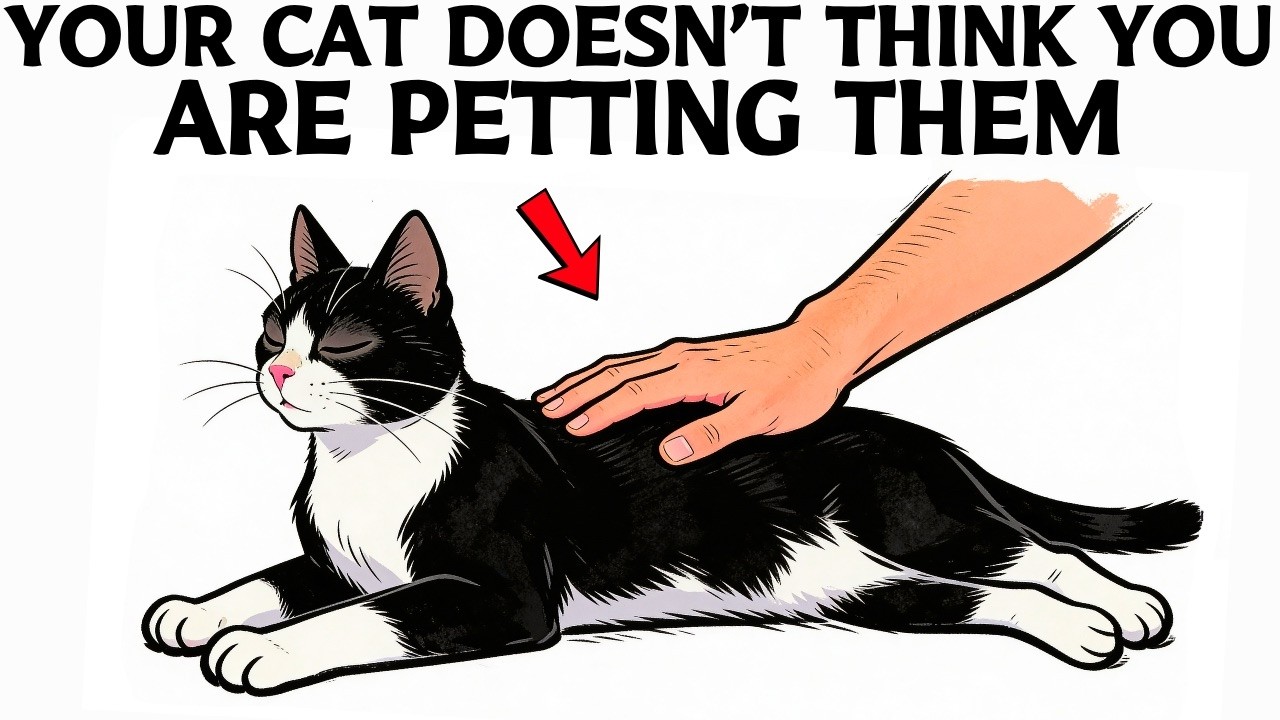
And before you can pull your hand away, they spin around and sink their teeth into you. And you sit there, bleeding a little, wondering what on earth you did wrong. Here’s the truth that almost no one tells you: tolerating your touch and enjoying it are not the same thing. Your cat lets you pet them because they trust you.
But the way most owners pet their cats is silently teaching them to pull away. If you keep doing it the same way, which most people do, you might be slowly turning yourself into something your cat braces for instead of leans into. Let’s start with the first mistake, and it’s probably the most common one of all. That spot right above their tail is a trap.
Think about how many times you’ve scratched that exact place. Your cat’s back end lifts up the second your hand gets near their lower spine. You take it as a green light. You think, look at that, they love it.
They’re basically begging for more. So you keep scratching, right above the tail, and for a few seconds it really does look like pure bliss. Your cat’s eyes are squinting, they’re pressing their hips up into your hand, and everything feels like a success. Then the tail starts twitching.
The skin ripples. They turn and bite. You’re left with a hand full of claw marks and a completely confused feeling in your chest. You did the exact same thing you always do.
You weren’t rough. You weren’t mean. You were just petting them the way you always have. So why did they attack you?
Here’s what’s actually happening under that fur. That patch of skin right above the tail is one of the most nerve-dense areas on your cat’s entire body. When you scratch it, you’re not just delivering a nice sensation. You’re firing off a flood of signals that their nervous system has to process all at once.
For the first few seconds, it feels genuinely good. It’s a rush, almost like a sensory firework show. But past that point, it tips into something called petting-induced overstimulation. Their brain can no longer tell the difference between pleasure and threat.
The signals get crossed. The pleasure stops being pleasure and starts being overwhelming. And their nervous system short-circuits. The bite isn’t aggression.
It isn’t them being mean or moody or spiteful. It’s their nervous system desperately trying to make the overwhelming sensation stop. And that thing where they lift their back end? That’s not them asking you to scratch there forever.
That’s a reflex. Kittens lift their hindquarters when their mother grooms them. It’s wired in before they ever meet you. So when your cat raises up into your hand, they’re not requesting a deep tissue massage on their tail base.
They’re responding to a nerve signal that happens automatically, the same way your leg kicks when a doctor taps your knee. You can’t stop that reaction. It’s built into them. But here’s the part that matters.
There’s actually one thing most owners skip entirely when they go to pet their cat. A small ritual that quietly tells your cat you understand their language. Get this right, and the way they respond to your hand changes completely. I’ll show you exactly what it is at the end of this video.
Once you see it, you won’t be able to unsee how often you’ve been skipping it. For now, the fix for the tail base problem is simple. Stay away from that area unless your cat specifically presents it to you. And even then, keep it to a few seconds.
Watch for the tail twitch. The second you see it, your hand stops. That’s not rejection. That’s your cat trusting you enough to tell you when enough is enough.
Most owners miss that signal entirely. They think the twitching tail means more, they think the raised hindquarters mean more, and they keep going until the bite happens. Then they blame the cat. But it was never the cat’s fault.
The second mistake is one that feels so natural you probably do it without thinking. Patting your cat like a dog. Have you ever caught yourself giving your cat a few quick pats on the head or side, the same way you’d greet a dog? It feels affectionate.
It feels playful. And honestly, your cat probably just sits there and takes it, so you assume it’s fine. You think, well, if they didn’t like it, they’d leave. They’re still here.
That means they’re enjoying it. But sitting there and taking it is not the same as enjoying it. Here’s what you need to understand about the way cats are wired. That quick patting motion isn’t reading to them the way you think it is.
Dogs evolved as pack animals. Rough physical play is built into how they bond. A firm pat on the side actually mimics the kind of contact they’d get from other dogs. Their nervous system reads it as social, energetic, even fun.
When you pat a dog, you’re speaking a language they understand down to their bones. Cats are the opposite. Cats aren’t an inherently tactile species. When they do touch each other affectionately, it’s through slow, sustained contact.
They press. They rub. They lean. Their entire touch language is built around steady pressure, not impact.
So when you pat your cat, even gently, their nerves register each tap as a tiny startle. They don’t flinch outwardly because they’ve learned you’re not a threat. But internally, their body is bracing every time your hand comes down. Over weeks and months, this becomes one of those quiet reasons cats start ducking away when hands move toward their head.
They’re not mad at you. Their body just learned to expect the impact. This isn’t just my opinion. There’s research behind it.
A study from the University of Lincoln, led by Dr. Sarah Ellis, tested 34 cats across eight different body areas. The results were clear. Cats consistently responded most positively to slow, focused contact around the cheeks, chin, and forehead, the areas packed with scent glands.
Touch near the tail base produced the most negative reactions. And patting doesn’t exist in their natural touch vocabulary at all. No matter how gentle you are, it always reads as foreign. The fix here is almost embarrassingly easy.
Trade the pat for a press. Instead of tap, tap, tap on the head, rest your fingers against their cheek and let them push into your hand. Instead of patting their side, run a slow flat palm down their back one time, then pause. You’ll feel the difference in their body almost immediately.
They stop bracing. They lean in. That’s what enjoying your touch actually looks like. It’s not a small change.
It’s the difference between your hand being something they tolerate and something they crave. Now, the third mistake is the one that hurts the most, because it happens out of pure love. Never pet your cat while they’re asleep. Your cat is curled up on the couch, eyes shut, completely relaxed.
You walk by and you give them a little stroke because how could you not? They look so peaceful. So soft. It feels like the most harmless thing in the world.
One little touch. What could possibly be wrong with that? Here’s what most owners never think about. Sleep is the most vulnerable state your cat ever enters.
In the wild, a sleeping cat is a dead cat. Every part of their biology knows this. That’s why they’re so careful about where they sleep and when. So when your cat finally closes their eyes in your home, they’re not just napping.
They’re making a decision. They’re telling their own nervous system that this place is safe enough to shut down completely. That’s not a small thing. That’s the deepest form of trust a cat can offer.
They are choosing to be vulnerable around you. Now think about what happens when you touch them mid-sleep. Their system was fully powered down. Your hand just forced it into emergency mode.
Heart rate spikes. Muscles tense. Pupils blow wide. Even if they see it’s just you and settle back down, the damage is already done at the neurological level.
Their brain just logged something. It logged, I was unconscious and something touched me. I didn’t know what it was. I couldn’t prepare.
Do that enough times, and your cat stops entering deep sleep around you altogether. They’ll nap. They’ll doze. But that full body, side exposed, dead to the world kind of sleep?
That starts disappearing. And most owners never connect the two. They just notice their cat seems more sensitive, more on edge, harder to read. They blame the cat’s personality.
They blame age. They never realize they’re the ones who broke the trust. Cats sleep anywhere from 12 to 16 hours a day. They need uninterrupted sleep cycles to regulate everything from mood to immune function.
When those cycles keep getting broken by a well-meaning hand, your cat becomes more irritable, more reactive, harder to predict. Not because something is wrong with them. Because they’re chronically under rested in the one place they’re supposed to feel the safest. The rule is simple and it costs you nothing.
If your cat is asleep, admire them from a distance. Let them wake up on their own. And when they do, let them come to you. It’s the single most respectful thing you can do for an animal that has chosen to trust you with their vulnerable moments.
Now, the fourth mistake is one that almost no one realizes they’re making until it’s too late. Two hand petting. Have you ever been petting your cat with one hand, and it’s going great? They’re leaning into it, they’re purring, everything is perfect.
So you decide to bring in the second hand. You want to give them the full experience. Both hands on the cheeks. Or one hand scratching the chin while the other strokes down their back.
It feels like you’re doubling the love. How could that possibly be wrong? Then you notice it. They freeze.
Their ears shift. Maybe they flick backward. And within seconds, they’re gone. They jump down, they walk away, they give you that look that says, what were you doing?
And you’re sitting there with two empty hands thinking, but you were just enjoying it. It was going so well. What went wrong? Here’s what you need to understand about how cats process physical space.
For most cats, especially a cat that’s still building trust with you, being touched from both sides doesn’t feel like double the love. It feels like losing their exit. It doesn’t matter that your hands are gentle. What matters is that their body is now boxed in.
The second that happens, every good feeling they had about the interaction gets overwritten by one primal signal. I can’t leave. That signal overrides everything. It doesn’t matter if you’ve never hurt them.
It doesn’t matter if you’ve only ever shown them love. Their brain is hardwired to prioritize escape routes above all else. A cat that feels trapped will tolerate affection for maybe a second, and then they shut down. They stop enjoying it.
They start waiting for it to be over. Now, I’m not saying there are no exceptions. If you have a cat who’s deeply bonded to you, the kind that flops belly up on your lap and goes completely limp the moment you touch them, two hands might genuinely feel fine to them. Some cats reach a level of trust where that escape route simply doesn’t matter anymore.
They know you that well. They trust you that completely. But those cats are the exception, not the rule. And even with them, that trust was built over months or years of you proving your hands were safe.
For every other cat, and that includes most cats, two hands is where the session ends, even if it doesn’t look like it on the surface. They don’t always run. Sometimes they just freeze. Sometimes they just tolerate it.
But they’re not enjoying it. Here’s the key principle: cats don’t just consent to being touched. They need to be able to revoke that consent at any second. Even between two cats who love each other, when one grooms the other, the receiver always has room to stand up and walk away.
There’s always a gap. The receiving cat knows they can leave at any moment. The moment that option disappears, the interaction stops being affection and starts being restraint. This connects to research from Nottingham Trent University, led by Dr.
Lauren Finka. The study found that giving cats choice and control during physical interactions made them significantly less aggressive and more affectionate. The moment you take that control away, and two hands landing on a cat’s body does exactly that, the interaction stops being a bonding moment and becomes something they need to survive. The fix is simple.
One hand, always. Keep one side of their body completely free. That way, they always know they can leave. And knowing they can leave is exactly what makes them want to stay.
Now, let’s get to the fifth mistake. This is the one that most owners skip entirely, and it’s the one that quietly tells your cat you don’t speak their language. I mentioned it earlier. This is it.
And once you see it, you’re going to realize you’ve been skipping it every single day. Think about what happens when you walk up to your cat. You reach down, you start petting. Maybe you go straight for the head.
Maybe you go for the back. Either way, your hand lands on their body before they’ve had any say in it. To you, that’s hello. To your cat, that’s a stranger walking up and putting their hands on your face without asking.
It doesn’t matter how many years you’ve lived together. It doesn’t matter that you feed them and love them and take care of them. Every single time your hand approaches, your cat’s brain is running the same assessment. Is this safe?
Is this coming at me in a way I understand? Here’s what most people don’t know. Cats have a greeting ritual they use with every cat they trust. When two bonded cats meet, they don’t just walk up and start grooming each other.
They approach slowly. They stop at a short distance. They extend their nose forward. The other cat meets them halfway.
They touch noses. They exchange scent. And only after that mutual checking does any physical contact happen. Every time.
No exceptions. It’s not a preference. It’s hardwired into how they establish that an interaction is safe before it starts. It’s their version of shaking hands.
It’s their version of saying, hey, it’s me. Are you ready for this? Is this okay? The human version of this is so simple it almost feels too easy.
Instead of reaching down and petting your cat, extend your hand slowly and hold it still a few inches from their face. That’s it. Don’t move it. Don’t wiggle your fingers.
Just hold it there and wait. What happens next tells you everything. If your cat leans forward and bumps your hand with their nose, or presses their cheek into your fingers, that’s a yes. That’s them completing the greeting.
That’s them saying, I recognize you, I trust you, and I’m ready to be touched. Now you can pet them. And the entire interaction starts from a place of consent instead of assumption. If they sniff and pull back, or they just look away, that’s a no.
Not forever. Just right now. Maybe they’re tired. Maybe they’re overstimulated.
Maybe they just don’t feel like being touched this second. And respecting that no is the single fastest way to make your cat trust your hands more tomorrow than they did today. Most people never offer their hand first. They just go straight for the touch.
And the cat tolerates it because they love you, because they know you, because they’ve learned you’re not a threat. But they never get the chance to say yes. They never get the chance to choose. And that small choice is everything.
When you offer your hand first, you’re not just petting your cat. You’re speaking their language. You’re showing them that you understand how they communicate. You’re giving them control over their own body.
And cats respond to that on a level that goes far deeper than any treat or toy. So the next time you walk up to your cat, don’t reach for them. Hold out your hand. Stay still.
Wait. Let them come to you. And when they press their cheek into your fingers, when they complete that greeting, you’ll feel the difference. They won’t just tolerate your touch.
They’ll lean into it. They’ll ask for it. They’ll seek you out. Because you finally took the time to learn their language.
And once you do, you’ll never go back to the old way again.