Your indoor cat seems perfectly happy. Safe, fed, cozy. But behind that calm, there’s something deeper most people miss. Indoor cats are masters at hiding boredom and stress, and if you’re missing the signs, your cat might be quietly living half the life they were built for.
Let’s start with the one thing that changes everything. When was the last time your cat actually caught what they were chasing? You wave the wand toy. They stalk.
They pounce. You laugh. Then you put it away. Playtime over.
Except for your cat, it isn’t over. It’s unfinished. Here’s what’s happening in their head. Every cat, no matter how pampered, still carries the instinct of a hunter.
Those instincts follow a complete sequence: stalk, chase, pounce, catch, and finally the kill bite. When play ends before the catch, your cat’s brain never gets the signal that says mission accomplished. Instead of feeling satisfied, they’re left buzzing with all that predatory energy and nowhere to put it. That’s often the real story behind the 3:00 a.
m. zoomies, the ankle ambushes, and the sudden bites that seem to come out of nowhere. Your cat isn’t being difficult. They’re being interrupted.
The fix is beautifully simple. At the end of every play session, let them win. Let them catch the toy, sink their teeth in, kick it with their back legs, and hold it like the mighty hunter they are. Then follow it with a small treat or their meal.
Hunt, catch, eat. That’s the full cycle nature wrote for them, and completing it is one of the most calming things you can give an indoor cat. But here’s the part almost nobody talks about. Play is just one piece of something much bigger your cat is missing indoors.
Something so overlooked that even loving owners take it away every single day without realizing it. Have you ever felt guilty that your place might be too small for your cat? Here’s some news that should lift a weight off your shoulders. Your cat doesn’t measure your home the way you do.
You see square feet. They see layers. In the wild, cats live in a three-dimensional world. They climb, they perch, they survey their territory from above.
Height isn’t a luxury for them. It’s security. From up high, a cat can watch everything, feel unreachable, and relax in a way they simply can’t on the floor. That’s why your cat keeps jumping on the fridge, the bookshelf, the top of the door frame.
They’re not being naughty. They’re claiming the territory your home forgot to offer them. This is where a small apartment can quietly outperform a big house. A single room with a cat tree, a couple of wall shelves, and a cleared spot on top of a dresser gives your cat more usable territory than an entire empty floor plan.
You’re not adding furniture. You’re adding real estate. Behaviorists often see multi-cat tension ease dramatically once vertical space goes up, because suddenly nobody has to fight over the same level anymore. Every cat gets their own floor of the building.
Start simple. One tall, sturdy cat tree near a window. One shelf they can reach in stages. One high spot that’s officially theirs where nobody bothers them, ever.
Watch how quickly they take ownership. When your cat starts choosing that perch over hiding under the bed, that’s them telling you they finally feel like the landlord instead of the tenant. Now, what does your cat do all day while you’re gone? For most indoor cats, the honest answer is not much.
Boredom in cats doesn’t look like boredom. It looks like sleeping sixteen hours and everyone just calls it normal. Your cat’s brain was designed to process a constantly changing world. Movement, sounds, smells drifting by, prey rustling in the grass.
Indoors, all of that gets replaced by the same walls, the same furniture, the same view of your living room every single day. But there’s one place in your home where the outside world still leaks in, and most owners treat it as an afterthought. The window. A good window setup is genuinely the closest thing to television your cat will ever have.
And just like TV, it’s all about the programming. A window facing a bare wall or an empty parking lot is a channel with nothing on. But add a bird feeder within view, even a cheap one suction-cupped to the glass or hung from a nearby tree, and you’ve turned dead air into a nature documentary that updates itself all day long. Birds, squirrels, falling leaves, the neighbor’s dog making a fool of himself.
That’s premium content. Then make the seat worthy of the show. A padded perch at window height or a cat tree pulled right up to the glass turns a quick glance into a full viewing session. Put it by the window with the most action.
If you can, the morning sun. Sunbeam plus bird feeder is basically a five-star resort for a cat. One small warning so the magic doesn’t backfire. If a strange outdoor cat starts hanging around your yard, some cats can get territorial and stressed watching them.
If you notice growling or tension at the window, deal with the visitor, not the window itself. Quick question. What do you think your cat’s strongest sense is? Most people say eyesight, maybe hearing.
But your cat experiences the world primarily through their nose. Their sense of smell is estimated to be around fourteen times more sensitive than yours. While you decorate your home for your eyes, your cat is reading it like a library of scents. Here’s the uncomfortable part.
For most indoor cats, that library has about three books in it. Think about what an outdoor cat smells in a single day. Other animals, plants, soil, rain, food trails, territory markings, stories layered on top of stories. Now think about your living room.
Same couch, same carpet, same candle you bought in October. To your cat’s nose, your home is a song stuck on repeat. A starved nose means a dull day, no matter how many toys are scattered on the floor. The good news?
Scent enrichment is the cheapest, laziest form of enrichment that exists, and almost nobody does it. Start with the classics. Catnip, obviously, but don’t stop there. Around one in three cats doesn’t respond to catnip at all, and their owners just assume their cat is broken.
They’re not. Try silvervine, which studies have shown works on most cats that ignore catnip completely. Valerian root and honeysuckle wood are two more that can light up a cat who’s been immune to everything else. Then go beyond the store-bought stuff.
Bring the outside in. A handful of clean leaves in a box, a stick from the yard, cat-safe herbs like cat grass growing on the windowsill. Even rotating where these smells appear keeps the mystery alive. The trick is rotation, not accumulation.
Introduce a scent, let them investigate, then take it away and bring a new one next week. A new smell in an old room is, to your cat, practically a new room. Watch what they do with it. The slow investigation, the open-mouth stare, the cheek rubbing to mix your scents together.
That’s not just play. That’s a cat finally getting to use the one sense they were built around. Here’s a question that sounds silly until you really think about it. When did eating become the easiest thing your cat does all day?
In nature, no cat walks up to a bowl. A cat’s entire day is organized around hunting, searching, stalking, working for every meal, eating small portions many times a day. Then we brought them inside, put their food in a dish, and deleted the single biggest activity their mind and body were built for. We didn’t just make eating easy.
We made their main job disappear. That’s why the bowl, as innocent as it looks, might be the most underestimated object in your home. When food requires zero effort, all that seeking energy has nowhere to go. Vets and behaviorists increasingly recommend making cats work for at least part of their food, because food puzzles have been linked to fewer signs of stress and boredom, healthier weight, and even improved litter box habits in some cats.
The upgrade is easy and honestly fun to watch. Start with a simple puzzle feeder or make one yourself. A clean plastic bottle with holes cut in it, kibble inside, and let them bat it around the floor. Muffin tins with treats hidden under toys.
Food scattered across a snuffle mat instead of piled in a dish. Then take it further. Hide small portions around the house before you leave for work. Now your cat spends the day hunting again, patrolling their territory with a purpose, and every discovery is a little victory.
One tip so it works from day one. Start easy. If the puzzle is too hard, your cat gives up and you both conclude it doesn’t work. Let them win fast in the beginning, then raise the difficulty as they get hooked.
What if the thing your cat wants most isn’t something you can buy? Think about your indoor cat’s life for a second. You decide when they eat. You decide when they play.
You decide when they get picked up, when they get petted, when the carrier comes out, when the vacuum roars to life. Almost nothing in their world happens on their terms. For an animal whose wild instincts are built entirely around controlling their own territory and their own body, that quiet powerlessness adds up. Researchers who study animal welfare keep landing on the same conclusion.
A sense of control over their environment is one of the strongest predictors of well-being in captive and companion animals. Not food. Not toys. Control.
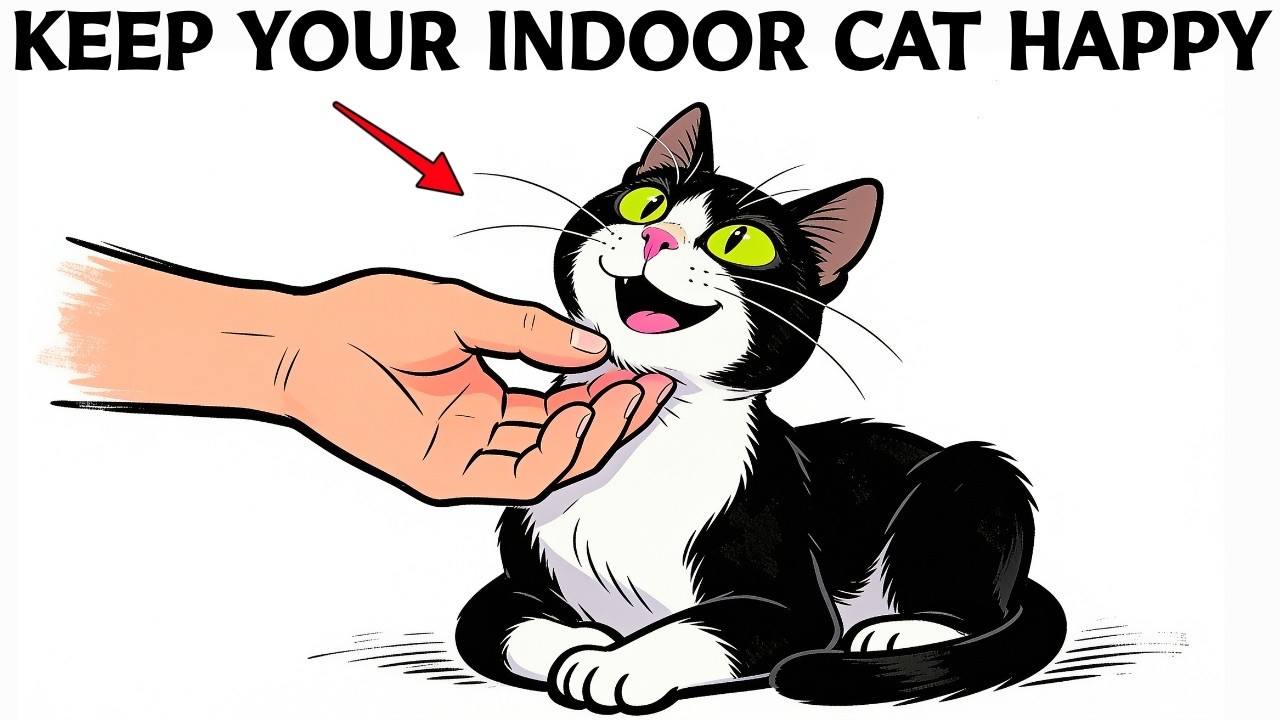
Here’s what giving your cat choice actually looks like. It’s letting them come to you instead of scooping them up mid-nap. It’s the two-second consent test. Offer your hand.
If they lean in, pet away. If they don’t, let it go. They’ll remember that you asked. It’s leaving the carrier out year-round so it stops being a kidnapping device and starts being furniture.
It’s never blocking their exit from a room, a lap, or a cuddle. It’s high perches and hideouts they can retreat to where nobody, not even you, bothers them. And here’s the beautiful twist. The more freedom you give your cat to say no, the more they start saying yes.
Cats that feel in control become bolder, more affectionate, more present. Because affection they choose is the only kind that feels safe to them.