Let’s talk about a sound that must be very familiar to you: the quintessential meow. This delightful vocalization is the sound most of us strongly associate with our feline friends. It’s fortunate that this is also the easiest cat sound for humans to imitate. However, there are several compelling reasons why you should consider meowing back at your cat. As strange as it may seem, doing so can change the dynamic between you and your pet. Moreover, there are other sounds we can make that enable us to communicate with our kittens effectively, in a language they will understand.
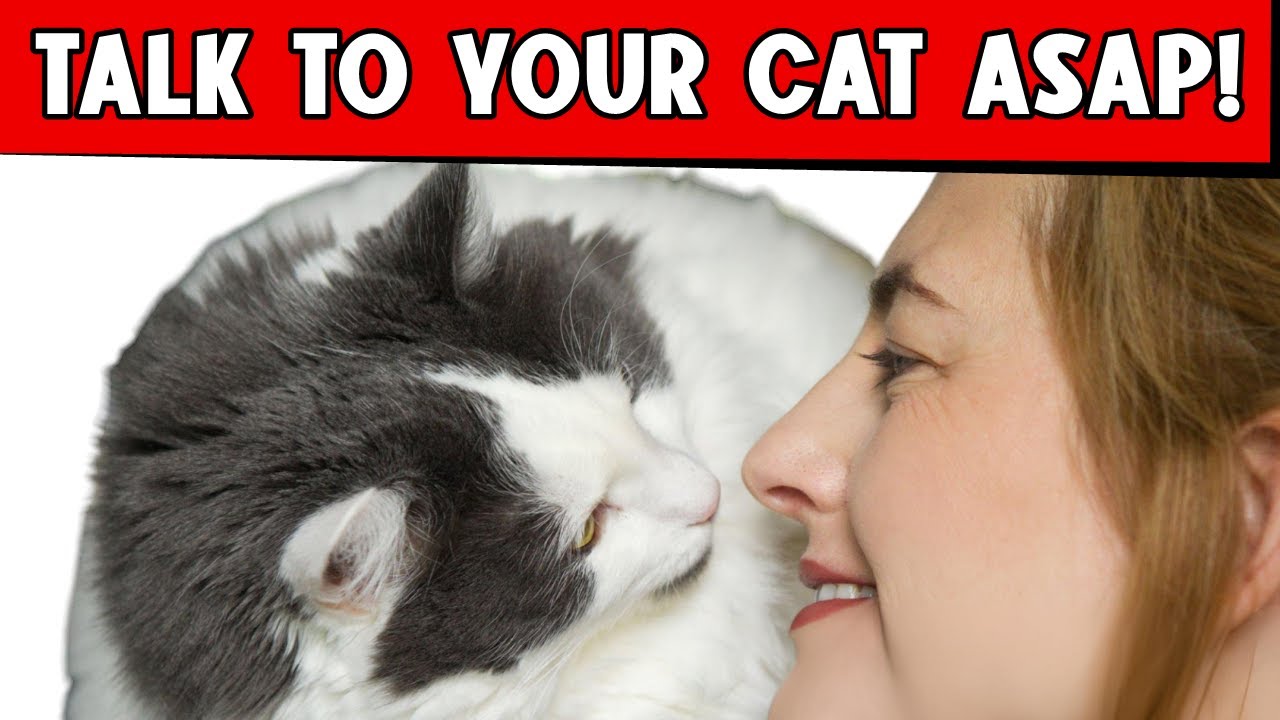
In this exploration of the magical world of our furry friends, we will delve into an array of questions regarding this fascinating form of communication. For instance, have you ever wondered why your cat meows when they see you? It may surprise you to learn that adult cats rarely meow at one another. Typically, they communicate using body language or softer sounds that may even be outside the range of human hearing.

So, if meowing is such a common sound associated with cats, why do they use it so frequently in our presence? There is an interesting context in which cats will meow at one another. When a kitten is attempting to communicate with its mother or a littermate, it will often meow. Kittens, unlike their adult counterparts, are not adept at the nuanced communication typically employed between grown cats. Consequently, they continue to meow when they need attention or express distress. This behavior is somewhat akin to how human babies cry for their caregivers.
As cats transition into adulthood, they discover that humans do not perceive their subtler forms of communication. Meowing becomes one of the few vocalizations that seem effective for engaging with us. In essence, your cat communicates with you using a form of “baby talk.” Yes, you read that correctly! The remarkable thing is that studies have indicated that cats tend to respond more favorably when you engage with them using baby talk. When you speak to them in a higher-pitched voice—akin to how you would address a small child—they seem to respond better. This reaction likely stems from the fact that cats find it easier to hear high-pitched sounds, and humans naturally raise their voice pitch when speaking in baby talk.
What about other sounds that can catch your cat’s attention? Interestingly, any high-pitched and quickly emitted sound is likely to attract a cat. For example, the sound “PBB” is notably effective; in fact, several languages contain translations for the word “cat” that incorporate various combinations of P and S sounds. Examples can be found in Romanian with the word “Pisa,” in Tagalog as “Pusa,” and in certain Arabic dialects as “bisa.”
However, it’s important to note that not all cats respond to such sounds in the same manner. For some kittens, the repeated S sound may be reminiscent of hissing, a vocalization associated with feline aggression. Additionally, you can get a cat’s attention by sucking your lower lip against your teeth and releasing it swiftly. With some practice, the sound you produce will resemble a small high-pitched chirp, akin to the distress call of a small rodent or bird—an irresistible sound for your cat’s ears, adapted to help them catch the attention of their natural prey.
Now, you might wonder if your cat understands you when you meow back at them. Unfortunately, like many animals, cats lack the ability to grasp a human-style language. They don’t possess specific words to convey distinct meanings; instead, they communicate through a variety of sounds with vague and generalized meanings. How each individual cat interprets these sounds largely depends on the context. For example, a hissing cat conveys anger, while a hissing cat in the context of guarding its territory indicates a desire for the intruding cat to leave.
When humans meow at them, cats generally don’t comprehend the context. As a result, they may simply respond with confusion, hearing a sound resembling a meow yet lacking the accompanying smells or visual cues that typically inform their understanding of such communication. Nevertheless, there are instances where you might find yourself engaged in a dialogue with your kitten, punctuated by a series of meows back and forth.

While you might interpret this as a sign that you are authentically communicating with your cat, the reality is that cats might respond to humans speaking normally as well. Their back-and-forth meowing is less about conversing and more about enjoying your company or signaling a request for something. This interaction can be seen as a game of sorts, where both you and your cat share a unique experience together.
It’s also interesting to note that not all cats exhibit the same level of vocalization. While all domestic cats meow, certain breeds are more talkative than others. Among the most vocal breeds are the Siamese, Burmese, and Japanese Bobtails. The first two belong to the category of Oriental breeds and are characterized by their relatively deep meows, which can sound quite human in some cases.
Kittens meow as a result of belonging to a classification of smaller cats that can meow and purr. Big cats, like lions and tigers, do not meow or purr in the same way, although they can produce a form of purring with a growl. They are limited in their vocal abilities, unlike smaller cats that can purr while both inhaling and exhaling. Big cats, however, compensate for this difference with their ability to roar—something our domestic cats do not do.
Many people might wonder why it can be challenging to sleep through a cat’s meowing. Ironically, this is one of the few instances when your kitten’s adorable little voice might not bring you joy. If your cat has an early awakening and decides it’s time for breakfast or playtime, their persistent meows can easily rouse the entire household. The high-pitched sound they produce is distinctive and can penetrate even the deepest of slumbers, making it nearly impossible to roll over and drift back to sleep. Why does this happen? Your cat instinctively taps into your most primal instincts. The pitch of their cries is quite similar to that of a human baby’s wail, which our brains are instinctively programmed to recognize and respond to, often preventing us from ignoring it.
You may also wonder why your cat occasionally meows strangely. One context in which an adult cat might meow at another is when seeking attention. For instance, if a cat is seriously injured or frightened, the cries for help can sound quite distressing. Female cats in heat or male cats that have noticed a female may meow to announce their presence to other nearby cats, expressing their readiness to mate. These meows often differ from the typical meows directed at humans. A yowl, the call of a distressed cat, typically has a lower pitch and longer duration than a standard meow. In contrast, a “catcall” is a specific sound made by female cats in heat to alert males, and it can be even lower-pitched and louder.
Many cat owners may panic upon hearing this for the first time, mistakenly believing their cat is in some sort of distress.
As we wrap up this exploration, you may still have questions, particularly about your cat’s perception of the world around them. For example, what does your cat think when they hear other cats meowing on television? Generally, if you regularly leave the TV on, your cat will become accustomed to it and may not notice isolated meows amongst the other sounds. In many shows, the sound of a cat meowing is layered with background noise, making it difficult for your cat to distinguish. However, if you deliberately play a recording of a cat meowing with nothing in the background and at a higher volume, your cat might display more interest.
While some cats may ignore it, others could become anxious, searching around for the mysterious “ghost cats” that seem to have intruded upon their territory. Although prankfully amusing, it is not wise to engage in this too often, as your cat likely does not enjoy the confusion it creates.

You might have come across 𝓿𝒾𝓇𝒶𝓁 videos depicting cats that seem to speak simple words or phrases like “hello” or “I love you.” This could lead to speculation about the possibility of our feline companions evolving to communicate more like humans. Unfortunately, the answer is no. These so-called talking cats may not be 𝒻𝒶𝓀𝑒, but they certainly don’t understand the words they produce. Sometimes cats simply emit odd sounds that humans interpret as language. Our brains are wired to detect patterns, often leading us to hear meanings where none exist. If a cat deliberately produces a sound that resembles what their owner commonly says, it is more akin to a parrot mimicking speech than a baby learning to talk.
As we close our discussion, I encourage you to consider whether your cat can recognize you. In a related video, I delve into whether cats can perceive your face, voice, and scent, distinguishing you from others in their world. Join me as we explore this fascinating aspect of our relationships with our furry companions.