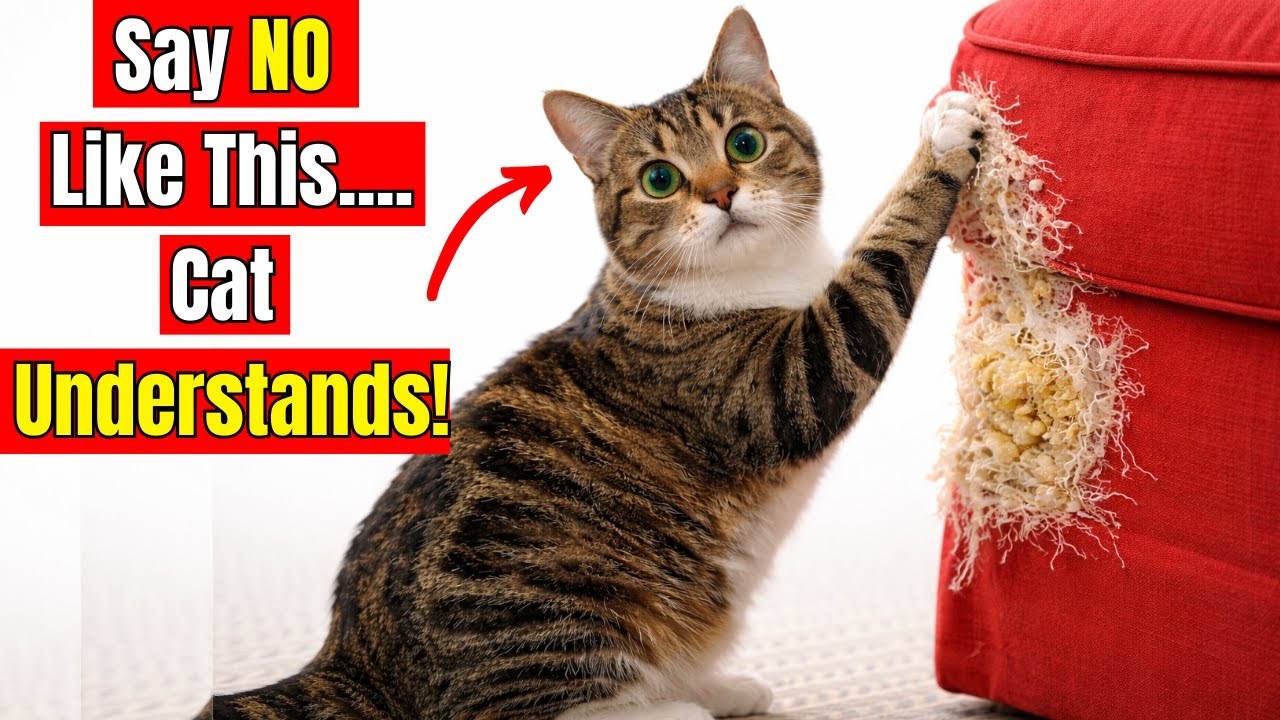
Your cat is scratching the couch, then jumps on the kitchen counter and knocks over a glass. You say no, but nothing changes. There is one way to say no that cats understand instantly, and almost no owner uses it. Miss the last part of this video and you will keep repeating the same mistake. Let us begin.
The fundamental truth. Here is what you need to understand first. Cats do not have a moral sense of right and wrong like humans do. When your cat scratches the couch, they are not being bad or trying to upset you. They are simply following natural instincts without understanding your household rules. This fundamental distinction matters because it completely changes how you should respond to unwanted behaviors. Yelling at your cat, hitting them, or spraying them with water teaches them exactly one thing, which is to be afraid of you. It does not teach them to stop the behavior itself. Research on feline behavior shows that punishment-based methods damage the trust between you and your cat. Your cat cannot connect your anger with their action the way you think they can. Instead, they just learn that you are unpredictable and potentially dangerous. This fear-based response does not modify behavior. Understanding that your cat operates on instinct, not malice, is the first step toward effective correction.
Do cats understand no? Let us address the most common question. Do cats actually understand when you say no? Cats do not comprehend human language the way dogs do. They cannot process the word no as a concept or understand its meaning inherently. However, they are excellent at recognizing patterns and forming associations through repetition. If you consistently say no in a firm voice while using strong body language, then physically remove them from the situation and redirect them to something appropriate, they start connecting that specific sound with stopping an activity. The key is absolute repetition and consistency in your response. Every single time they perform the unwanted behavior, you must respond identically. Over weeks of consistent training, your cat’s brain begins to recognize the pattern. The sound no becomes a signal that their current activity will be interrupted. This learned association creates the response, not language comprehension.
How to say no effectively. When you need to tell your cat no, your delivery matters more than the word itself. Say no firmly and authoritatively without shouting or yelling. Make direct eye contact with your cat to ensure you have their full attention. Here is something that works surprisingly well. Hiss at them while giving the command. This might feel awkward at first, but there is a practical reason. Cats use hissing in their own communication to show disapproval or establish boundaries with other cats. When you hiss, you are using a sound they instinctively understand from their species social interactions. Combine this with pointing your finger directly at them to focus their attention on you. Your body language reinforces the vocal command in ways cats can interpret. Stand tall, make yourself appear larger, and maintain the direct eye contact. This multi-sensory approach combines human commands with feline communication for maximum effectiveness.
Why no alone does not work. There is a significant limitation to just saying no that most owners do not realize. When you only correct your cat while you are present, they learn something very specific: do not do this behavior when my owner is watching. Your cat’s brain does not connect the behavior itself as inherently wrong. They connect your presence with needing to stop. This is why you will catch them doing the exact same thing when you are not in the room. The same problem happens with spray bottles. Your cat learns to avoid you and the spray bottle, not the counter or furniture. They will simply wait until you are gone to continue the behavior. This creates a frustrating cycle where owners think their cat is being deliberately defiant, when actually the cat just has not learned what the owner intended. The behavior modification failed because the association was incorrect from the start.
The environmental correction. The most effective correction method works even when you are not there. It is called environmental punishment. Motion-activated air sprays placed on counters will automatically spray when your cat jumps up, teaching them the counter itself delivers unpleasant consequences. Double-sided 𝓉𝒶𝓅𝑒 on furniture stops scratching because cats hate the sticky feeling on their paws. Aluminum foil creates sounds and textures they naturally avoid. For cats who chew on wires or plants, bitter apple spray makes those items taste terrible without harm. The advantage is clear. Your cat associates the negative experience directly with the location or object, not with you. Your relationship stays positive while the unwanted behavior stops. The cat learns the environment itself is unpleasant, so they avoid it whether you are home or away. This creates consistent behavior modification that lasts long-term.
Before you discipline. Before correcting any behavior, ask yourself an important question. Is my cat actually misbehaving, or are they just expressing natural instincts without proper outlets? Cats need to scratch regularly. It maintains their claw health, stretches their muscles, and marks territory through scent glands in their paws. If you have not provided adequate scratching posts, your furniture becomes their only option. Sprinkle catnip on scratching posts to encourage use. If your cat drinks from faucets constantly, they might prefer running water over still water in bowls. Cat fountains solve this by providing continuous water movement. Cats who constantly jump on counters often want elevation to observe their surroundings. A cat tree near the kitchen gives them that elevated viewpoint without the counter issue. Meeting these natural needs eliminates most problem behaviors entirely.
The litter box problems. Litter box issues require special attention because they are often medical, not behavioral problems. If your cat suddenly starts urinating or defecating outside the litter box, schedule a veterinary visit immediately. Urinary tract infections, kidney problems, and diabetes commonly cause elimination issues. Cats experiencing pain while urinating will avoid the litter box because they associate it with discomfort. Beyond medical issues, check environmental factors carefully. Cats are extremely clean animals. A dirty litter box that is not scooped at least once daily will be avoided. Some cats have strong preferences about litter texture and will refuse certain types completely. Box location matters significantly, too. Boxes in high-traffic, noisy areas make cats feel vulnerable during elimination. They need privacy and quiet. Multiple cats require multiple boxes, ideally one per cat plus one extra to prevent territorial competition.
The sudden aggression warning. If your normally calm cat suddenly becomes aggressive, biting or scratching without provocation, this is not a discipline issue. Sudden aggression often signals pain somewhere in their body. Cats instinctively hide illness and pain as a survival mechanism. When touched in a painful area, they react defensively with aggression. Dental disease causing severe tooth pain, arthritis in joints, or internal injuries can trigger aggressive responses. Older cats developing hyperthyroidism often show unexplained aggression and irritability. Even brain tumors or neurological problems can cause personality changes. Do not punish aggressive behavior that appears suddenly. Get a complete veterinary examination with blood work to identify underlying medical causes before assuming it is behavioral. Pain management often completely resolves what appears to be aggression once the medical issue is treated properly.
The excessive vocalization signs. When cats start meowing excessively, especially at night or in ways they never did before, it is not always attention-seeking. Senior cats experiencing cognitive dysfunction, similar to dementia in humans, become confused and vocal, particularly at night when disorientation increases. Hyperthyroidism causes cats to become extremely vocal and restless because their metabolism is dangerously overactive. High blood pressure can cause distress and yowling. Cats in pain will vocalize more than usual. If your cat’s meowing pattern changes dramatically or they sound distressed rather than demanding, this warrants immediate veterinary attention. Blood pressure checks and thyroid testing can identify treatable conditions before they become life-𝓉𝒽𝓇𝑒𝒶𝓉𝑒𝓃𝒾𝓃𝑔. Night vocalization in senior cats, especially, should never be ignored as annoying behavior. It indicates genuine medical or cognitive issues requiring intervention and treatment.
Why cats do not listen. Many cat owners get frustrated because their cat clearly understands commands but chooses to ignore them. This is not stubbornness or spite. Cats evolved as solitary hunters, not pack animals with hierarchical structures like dogs. They do not have an instinct to obey authority figures. Cats respond to motivation and incentives, not commands or dominance. This is where positive reinforcement becomes powerful. When your cat uses their scratching post instead of furniture, immediately give them a treat. They will start connecting that behavior with food rewards. Their brain releases dopamine, making them want to repeat the action. This neurological response creates stronger behavioral changes than any punishment method. Understanding your cat’s evolutionary psychology explains why traditional obedience training fails, but reward-based training succeeds consistently with lasting results.
The building reward systems. Create a consistent reward pattern for behaviors you want to encourage. Call your cat’s name, and when they come to you, give them a treat immediately. Timing is absolutely critical here. The reward needs to happen within three seconds of the desired behavior for your cat to make the connection. If you wait too long, they will not understand what they are being rewarded for. Use this for everything. Staying off counters, using scratching posts, coming when called, being calm instead of destructive. The pattern builds over time with repetition. Start with high-value treats your cat loves most. Gradually reduce treat frequency as the behavior becomes habitual, but never eliminate rewards entirely. Intermittent reinforcement actually strengthens learned behaviors more than constant rewards. Your consistency and timing determines success.
Avoiding accidental rewards. Many owners accidentally reward behaviors they are trying to stop. If your cat jumps on the counter and you pet them, talk to them, or even just make eye contact, you have given them attention. To a cat, any attention is a reward. If your cat meows constantly for food and you eventually give in, you have taught them that persistent meowing works. The solution is complete indifference to unwanted behaviors. When your cat does something you do not want, turn away and ignore them entirely. No talking, no eye contact, no physical interaction. Then, the moment they do something correct, immediately reward them. This creates a clear pattern. Wrong behavior gets nothing. Right behavior gets everything. Your cat learns which actions produce desired outcomes through this consistent response.
The timing problem. One of the biggest mistakes in cat discipline is delayed punishment. Cat brains can only connect cause and effect if the consequence happens within two to three seconds of the behavior. If you come home and discover your cat knocked over a plant or had a litter box accident hours ago, scolding them accomplishes nothing. They cannot connect your anger to something that happened earlier. From their perspective, you are just randomly upset with them. This creates confusion and anxiety. They do not know what they did wrong, so they cannot learn to avoid it. Correction only works when it is immediate. This is why environmental corrections work better than owner-delivered corrections. The environment provides instant feedback every time, creating reliable cause and effect learning that actually modifies behavior permanently.
Never rub their nose in it. There is an old punishment method that some people still use: rubbing a cat’s nose in their urine or feces after an accident. This is harmful and completely ineffective. Cats are naturally fastidious animals who value cleanliness. Forcing their face into waste creates severe stress and anxiety. It can actually cause litter box aversion where your cat becomes afraid to use any litter box, making the problem worse. They do not understand this as punishment. They just experience trauma associated with elimination, which leads to long-term behavioral problems and medical issues from holding their bladder too long. Some cats develop such severe aversion they will eliminate in hidden places around your home rather than use a box. This outdated method damages your cat psychologically without teaching anything useful about proper elimination habits.
Physical punishment fails. Physical discipline, including hitting, smacking, or rough handling, damages your relationship without fixing behaviors. Cats who are hit develop hand-shyness. They will flinch when anyone reaches toward them, even for petting. They become fearful and start hiding to avoid interaction. Some cats develop defensive aggression, attacking because they feel threatened. Physical punishment causes chronic stress, which leads to health problems: over-grooming creating bald patches, appetite loss, weakened immune system. Most importantly, it does not stop the behavior you are trying to correct. Your cat will continue doing it when you are not around because they only learn to fear you, not avoid the action. The behavior becomes hidden, not eliminated. Trust between you and your cat, once broken by physical punishment, is extremely difficult to rebuild over time.
What actually works? Effective cat discipline combines several elements working together. Use firm verbal correction with body language only when you catch the behavior happening. Set up environmental deterrents so the location itself provides consequences when you are not there. Make sure your cat has appropriate outlets for natural behaviors like scratching, climbing, and hunting play. Build a positive reinforcement system where correct behaviors earn immediate rewards. Never use delayed punishment, nose rubbing in waste, or physical discipline. These methods fail and cause harm. For elimination problems, always rule out medical issues first before assuming it is behavioral. Consistency matters more than any single technique. Your cat needs the same response to the same behavior every time. Mixed messages confuse them and prevent learning. Patient, consistent application creates lasting behavioral changes.
Training your cat requires patience and understanding of how they learn. They are not stubborn or spiteful. They are responding to their instincts and the consequences you create. When you use methods based on how cat cognition actually works, behaviors improve without damaging your bond. The relationship you build should be based on trust and positive associations, not fear. Share your biggest cat behavior challenge in the comments. What methods have you tried that worked or did not work? Your experience might help other cat owners facing similar issues. Every cat is trainable when you understand their psychology and use appropriate techniques. The key is consistency, patience, and working with their nature.