Breaking news reveals a startling truth: your cat does not see you as a human but as a colossal, clumsy fellow feline, radically shifting how we understand feline companionship. This revelation transforms everyday interactions and sheds light on the deep, complex bond that cats forge with their human “colony members” instead of owners.
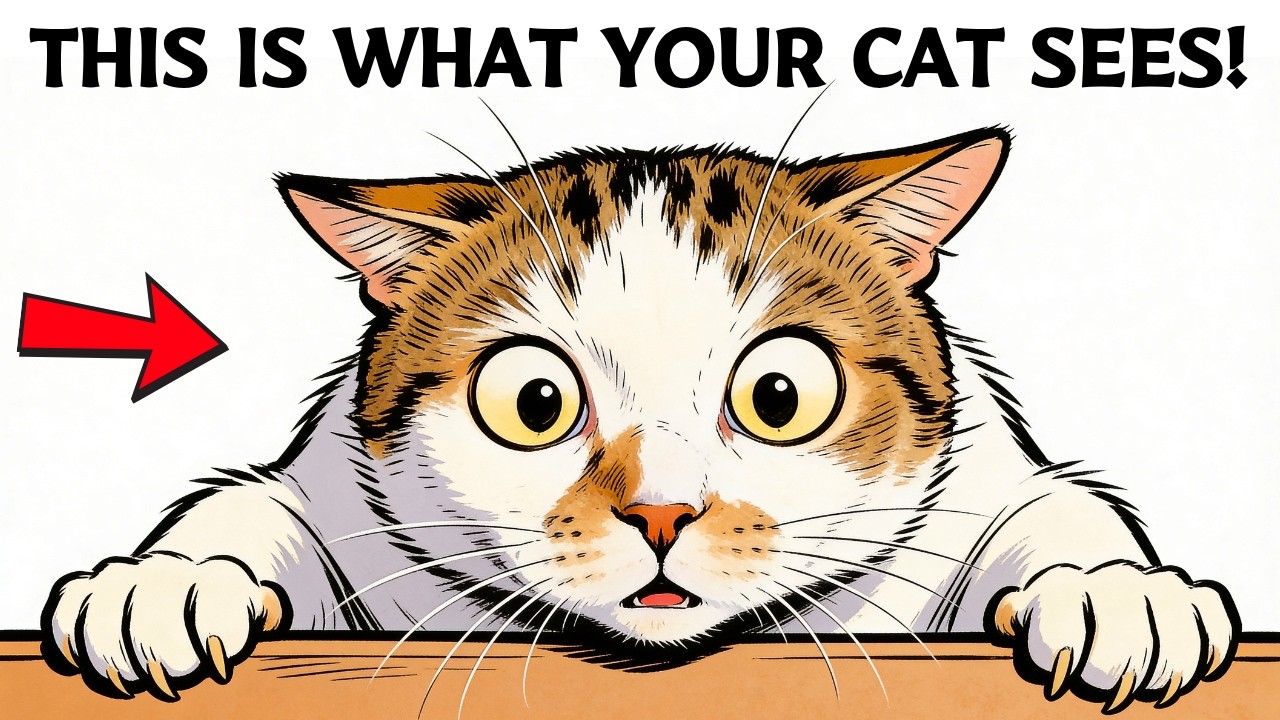 Cats perceive humans not as masters or owners but as oversized cats sharing their living space. Animal behaviorist John Bradshaw’s extensive research shows cats never evolved unique social patterns for humans. When your cat rubs against you or grooms your hand, it mirrors behaviors exhibited among other cats, signaling respect and equality rather than submission.
This discovery reframes the often-misunderstood feline indifference mistaken for coldness. Unlike dogs who display overt excitement and a desperate need to please, cats maintain an equal status relationship with humans. This subtle but profound behavioral difference challenges decades of assumptions about pet ownership and bonding rituals.
Further astonishing is the understanding of why cats bring you “gifts”—dead mice or struggling prey. Far from random or grotesque acts, these moments are instinctive teaching behaviors. Your cat sees you as hopeless in survival skills and instinctively attempts to educate you, mirroring how mother cats train their kittens in the wild.
Indoor cats adapt this behavior by dropping toys and observing human response, sometimes coaxing you to “hunt” with them. This nurturing instinct reveals a role reversal where the feline becomes the caregiver, deeply invested in your survival, highlighting an unspoken partnership forged by ancient instincts and modern cohabitation.
 Visual recognition is another startling revelation. Cats’ vision blurs anything closer than 10 inches, obscuring your face. Unlike humans’ detailed sight, cats detect shapes and movement with exceptional sensitivity. This means they don’t recognize you by visage, but by your motion, scent, and tone—the “whole feeling” encapsulating your presence.
This sensory reality debunks common misconceptions about feline recognition and affection. Your cat may seem aloof, staring past your face, but it’s because their vision and sensory priorities differ wildly from ours, relying heavily on smell and movement to “identify” and bond with you.
The meow—a sound so familiar in cat-human interactions—is a remarkable evolutionary masterpiece. Adult cats almost never meow at other cats, reserving this vocalization exclusively for humans. This communication tool originated as a kitten’s survival cry and has been uniquely adapted by cats to speak specifically to their owners.
Each meow your cat makes carries specific meaning and is tailored exclusively to your relationship. Nutrition demands, calls for attention, and even late-night wake-up calls manifest as distinct sounds evolved solely for human comprehension—profound evidence of cats’ dedicated linguistic adaptation to their human companions.

Perhaps most profoundly, scientific studies now prove you are the sanctuary your cat relies upon to feel safe and secure. Research from Oregon State University uncovers that over 60% of cats demonstrate a secure attachment style mirroring human infant-mother bonds, revealing that your presence profoundly stabilizes feline emotional well-being.
Cats exhibit stress and anxiety in your absence and relaxation upon your return—a biological testament to their dependence and attachment. This emotional bond defies simplistic notions of pet ownership, underscoring that to a cat, you are not just another being but a vital source of comfort and security in their world.
This groundbreaking insight compels a radical reassessment of how humans interact with cats. Recognizing that your cat views you as part of their social group, a teacher, a protector, and a companion reshapes the essence of feline care from ownership to kinship, demanding greater sensitivity to their subtle social cues.
 The implications are urgent: misreading your cat’s behavior could mean missing vital signs of affection and stress. Understanding these dynamics enhances communication, improving both feline welfare and human satisfaction. The bond is more intricate and profound than ever imagined, requiring respect for your cat’s unique social perception.
As this new knowledge permeates pet care, veterinarians, trainers, and cat owners alike must adjust their approaches, emphasizing empathy and recognition of feline cognition. The era of seeing cats as merely pets ends; they are social equals, teachers, and emotional anchors woven into our shared lives with evolutionary finesse.
Ultimately, this breakthrough underscores a timeless truth: to your cat, you are neither master nor stranger—you are home. This revelation challenges us to honor our feline companions’ perspectives, embracing a relationship built on mutual recognition, respect, and deep-seated emotional connection that transcends species lines.
Stay tuned as ongoing research continues to unravel the mysteries of feline cognition and behavior, promising to revolutionize human-pet relationships worldwide. For now, cherish the silent, profound messages your cat conveys—they are far richer and more meaningful than anyone realized until today.