When your cat climbs onto you, do you know what just happened? Most people call it cuddling. It isn’t. A cat’s entire body just formed a sentence.
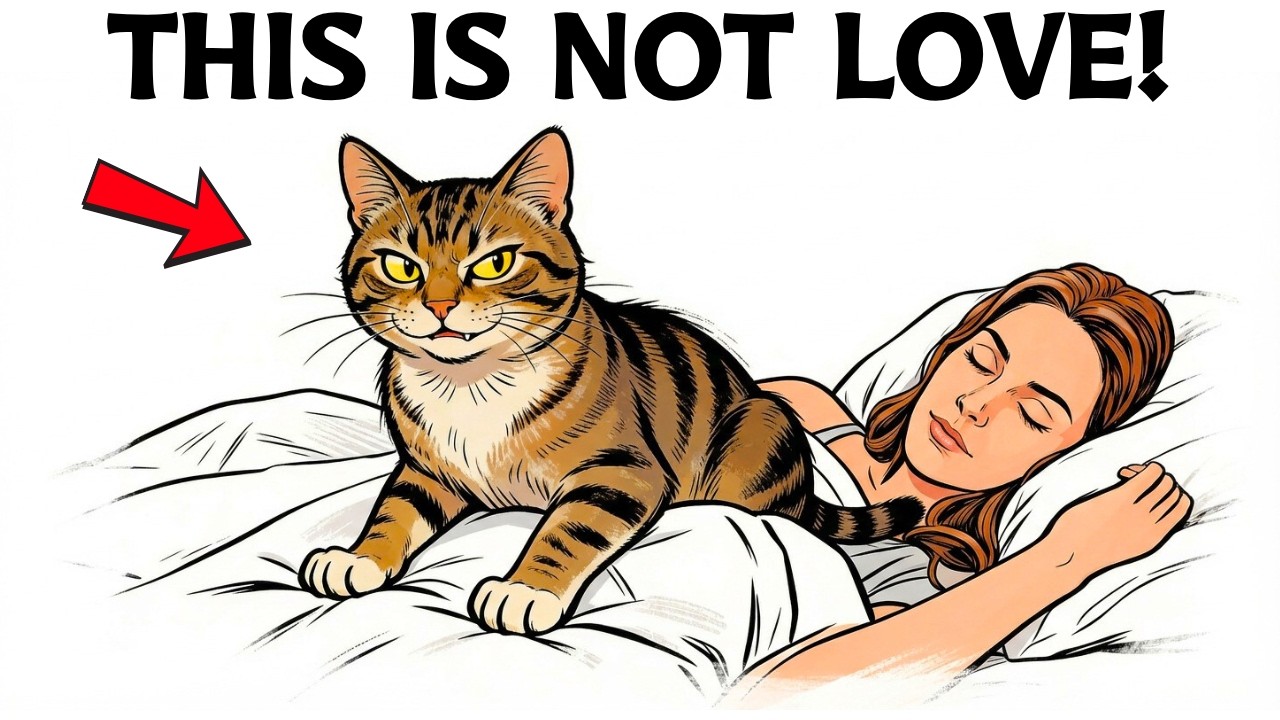
Sometimes it’s a warning. Sometimes it’s a claim. And sometimes it’s the most emotionally loaded thing they can say without making a sound. If you answer it wrong, you won’t just miss the message.
You’ll teach them to stop sending it. The climb starts before you feel it. It starts in their nose. A cat has close to two hundred million scent receptors.
You have about five million. That means your cat smells things in your body that you can’t detect yourself. When you’re stressed, your cortisol rises. When you’re sad, your breathing shifts.
When you’re getting sick, your skin and sweat release different chemical compounds. Your cat catches all of it before you do. That’s why they climb on you out of nowhere on the days you aren’t feeling your best. It isn’t coincidence.
There was a cat named Oscar who lived in a nursing home. He would climb onto patients’ beds and refuse to leave, sometimes hours before they died. The doctors came to trust his behavior. They believed Oscar was sensing the chemical and temperature changes the human body releases near the end of life.
Your cat probably isn’t predicting anything that serious. But if they suddenly climb on you when they normally don’t, check in with yourself. Are you more stressed than usual? Are you sleeping poorly?
Is something physically off that you’ve been ignoring? Your cat might be the first one in the room to notice that you need attention. And the fact that they climbed on you instead of walking away? That’s them saying, “I’m not leaving you alone with this.
”
But not every climb is that tender. Some climbs are about ownership. This one stings a little. Cats have scent glands in their paw pads called interdigital glands.
Every time they press their paws into your body, they release pheromones onto you. Those pheromones are a name tag. They tell every other animal in the house, “This human belongs to me. ”
If you have more than one cat, you’ve seen this play out.
One cat climbs on you. Ten minutes later, the other cat does the same. That’s not both of them being affectionate at the same time. That’s a turf war happening on your lap.
And here’s where most people mess up. When you pick your cat up and move them mid-climb, you erase their entire message. To your cat, that feels like rejection, even if you were just getting comfortable. So let them finish.
Give them a minute to press in and settle. That’s all they need. Then there’s the humbling possibility. Sometimes your cat doesn’t want you at all.
They want your heat. Cats run at about 101. 5 degrees Fahrenheit. You run cooler than they do.
Because of that, your cat is always looking for the warmest surface in the room so they can hold their temperature without burning extra energy. Your body is the most reliable heat source around. A 98. 6-degree heating pad that breathes.
Think about when they climb on you most. Late at night. Early morning. Cold evenings when the heat switches off.
Your cat isn’t suddenly more affectionate at midnight. They’re cold. This is especially true for thin-coated breeds like Siamese, Burmese, and Sphynx cats. They lose body heat faster, so they seek contact warmth aggressively.
But even long-haired cats do it when the house drops enough. You can tell the difference between a heat climb and an affection climb. A cat that wants warmth will find the warmest part of you, usually your chest or stomach, and drop. No kneading.
No slow blink. They tuck their paws under and go still almost immediately. The goal is energy conservation, not connection. If your cat keeps waking you at 3:00 a.
m. by lying on your chest, they might not need attention. They might need a heated cat bed placed where they already like to sleep. You could get your full night’s rest back without hurting their feelings.
But some climbs come from a much more restless place. Cats have anxious days, just like you do. And when they do, they don’t climb on anything random. They climb on you.
Because you’re the one thing in the room that still feels predictable. A new piece of furniture. A stranger’s voice on the TV. Construction noise outside.
Even a new air freshener. A cat relies heavily on scent to feel safe. When something changes in their environment, their nervous system goes into a low hum of alert. And they look for something stable to cling to.
That something is you. An anxious climb looks different from a loving one. An affectionate cat approaches slowly, body loose, tail relaxed, settling in at their own pace. An anxious cat moves fast.
When they land, their body feels rigid. Their pupils are dilated. Their ears are flat or rotating. Their claws are out, not to hurt you, but to grip.
This is the moment where most owners make it worse. The instinct is to start petting and talking in a soft voice. But a cat that’s already overstimulated doesn’t want that extra touch. So don’t rush to comfort them.
Just be the surface. Let your body be the calm thing they came looking for. Keep your breathing slow. Stay quiet.
Once their body starts to soften and their breathing slows down to match yours, that’s when they can handle touch. Not before. Some cats climb on you for an even more fragile reason. They need to know if you’ll reject them.
Imagine someone you love walks up to you for a hug, but the whole time they’re watching your face, waiting to see if you’ll push them away. That’s what some cats do. Especially rescued cats. Rehomed cats.
Cats who were yelled at for climbing on furniture. Cats who learned somewhere along the way that getting close to a human carries risk. These cats don’t climb on you because they already feel safe. They climb on you to find out if they are safe.
And those are two very different things. You can spot them mid-climb. They move slowly. They pause halfway.
Their body stays tense. Their eyes stay locked on your face. Not relaxed and blinking, but watching. They’re reading every micro-expression you make before committing to stay.
And this is where you can ruin it without knowing. You shift your weight. You reach for your phone. You adjust the blanket.
To you, that’s nothing. To a cat in the middle of a trust test, that’s a flinch. That small movement just told them maybe this isn’t safe after all. So if you notice that hesitant climb, do one thing.
Nothing. Don’t reach for them. Don’t adjust. Don’t even look directly at them.
Just stay still and let them land. Let them choose to stay. Those few seconds of stillness do more for your bond than a year of treats ever could. Then there’s the climb that changes everything.
The one that has nothing to do with territory, nothing to do with heat, nothing to do with stress. When your cat climbs onto your chest and starts pressing their paws into you in that rhythmic push and pull, and then gives you that slow, heavy blink, they’re doing something older than language. That motion is called milk treading. It’s the exact same movement a kitten makes while nursing from its mother.
It’s the first thing their body ever learned to do. Adult wild cats stop doing this after they’re weaned. It disappears. But domestic cats never stop.
Scientists believe that’s because of neoteny: domestication kept their kitten behaviors alive into adulthood. The behavior survived because cats kept living with humans. When an adult cat kneads, their brain releases dopamine and oxytocin at the same time. Dopamine for pleasure.
Oxytocin for bonding. It’s the same chemical combination that floods a mother’s brain when she holds a newborn. Your cat is recreating the safest neurochemical state they have ever experienced. And they’re choosing to do it on you.
The next time your cat climbs onto your chest, stay completely still. Let them settle. Let them press in.
In that moment, your cat just went back to the safest place they’ve ever known, and they put you in it.