What’s that noise? The sound of tiny paws racing across the hardwood floor catches our attention, doesn’t it? It’s often puzzling—what could be causing such ruckus? The answer, in this case, lies with the “zoomies.” This adorable and somewhat chaotic behavior is a charming nickname for the habit many cats exhibit, where they dash energetically around the house, seemingly without a care in the world. For many of us, this can lead to the conclusion that our feline friends have a touch of madness. However, is wildness the only explanation behind these spirited escapades, or is there something more significant linking this behavior to what we’ve done hours earlier?
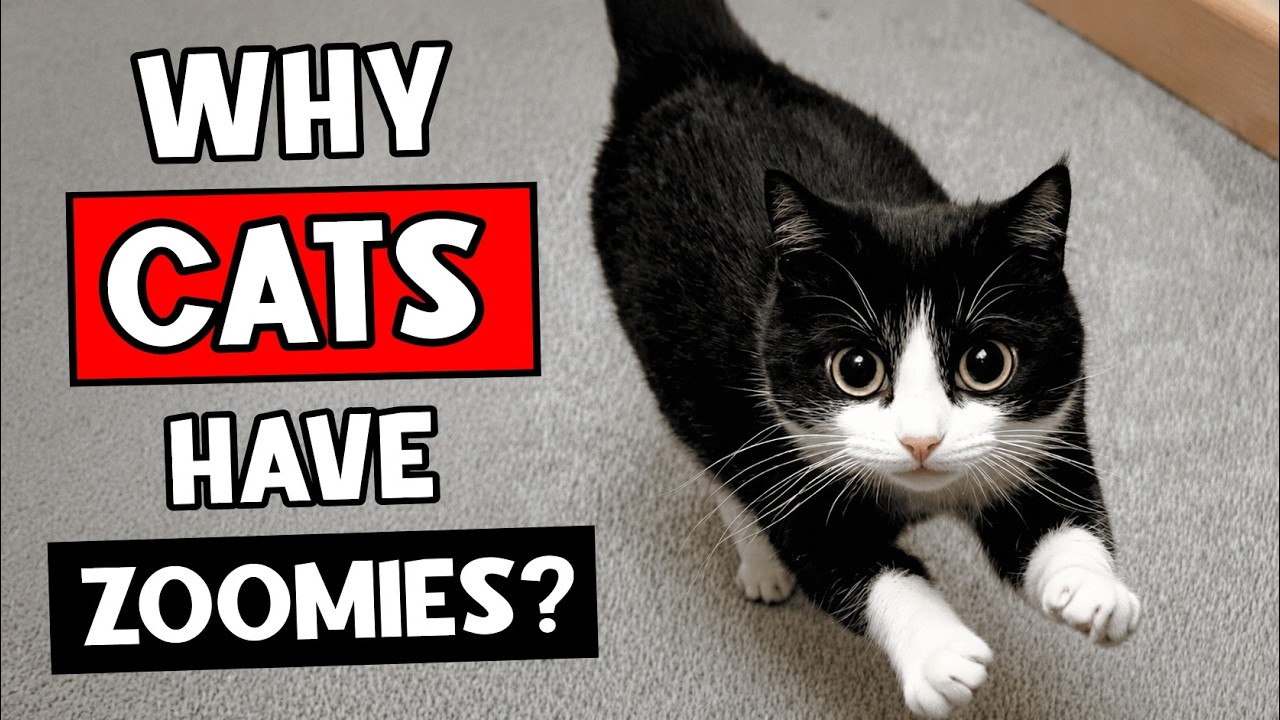
In this exploration, we will dive into nine distinct explanations for what drives cats to experience these episodes of exuberance, including five that are closely tied to their human companions’ actions or inactions.
Explanation one: Sometimes, the simplest answers are the most accurate. One of the most common reasons for your cat’s unexpected bursts of energy is simply pent-up energy. Cats, as we know, spend a good portion of their day napping—this is a trait inherited from their wild ancestors, who needed to conserve energy for hunting. However, in today’s environment, where hunting usually means capturing a morsel of kibble rather than chasing down prey, our furry friends often find themselves brimming with energy. With all this built-up energy and no outlet, the natural inclination is to release it through playful and sometimes frenetic activities, like racing around the house.

Explanation two: Speaking of energy, let’s not overlook the fact that your cat might actually be in pursuit of something. Luckily, there’s no need to panic and check every nook and cranny for mice. Most likely, what they’re chasing after is an insect, or, just as frequently, they’re engaged in a playful chase after nothing at all. Cats are natural hunters, and they love to engage in play that simulates hunting. They can bat around little balls, leap after toys, and pursue flickering lights from laser pointers. In many cases, when you see your feline sprinting around, they could be pretending to chase imaginary prey. Interestingly, their keen eyesight is attuned to detect subtle changes in light levels that we may not perceive, which might explain their fascination with chasing shadows or staring intently into empty space as though they’ve spotted something extraordinary.
Explanation three: A curious and quirky behavior observed in many cats is their tendency to take a high-speed victory lap after using the litter box. While the scientific community hasn’t reached a consensus on why this happens, several theories exist. It might be a celebration of a job well done, or perhaps a way for them to release a bit of pent-up energy. Alternatively, they could be trying to shake off any discomfort or, quite literally, an itch. If your kitty tends to race around immediately after visiting the litter box, it’s wise to keep an eye on their behavior, particularly if they seem agitated or frantic. This behavior is usually harmless, but in rare instances, it could indicate health issues, such as parasites.
Explanation four: One of the more frustrating aspects of the zoomies is their timing. It often seems that our cats have the whole day to unleash their energy but choose to do so at night when we’re trying to enjoy a peaceful slumber. Why, then, does this happen mostly when the sun goes down? The truth is that cats are crepuscular creatures, meaning they are most active during dawn and dusk. Their natural instincts drive them to be lively at these times, mirroring their wild ancestors’ patterns of hunting and surviving. While they may also be playful during the day when we are around, nighttime often prompts them to engage in their more energetic pastimes.

Explanation five: Moreover, the sometimes chaotic nature of the zoomies can often be triggered by external stimuli, particularly loud noises. Cats have a heightened sense of hearing, much more sensitive than humans, which means that sounds we might consider merely loud may be overwhelming for them. Their instincts, honed through generations of evolution, tell them to fear potential threats, often leading to surprising reactions to sudden sounds. Whether it’s the sound of a dropping pan or door slamming, a loud noise can send your cat sprinting into action. In such situations, understanding the environment could give insight into your furry friend’s sudden energetic outbursts.
Explanation six: Just as animals can sense external sounds, they are also remarkably adept at picking up on the emotional energy surrounding them, especially from their human companions. Cats are highly sensitive creatures and can easily detect shifts in our moods. If their favorite person is glowing with excitement, perhaps because of a personal accomplishment or a joyous occasion, it’s likely that your keen feline will mirror this energy. They may channel this uplifting excitement into their own mini zoomie session around the living room to share in the elation.
Explanation seven: However, there are moments when your cat’s zoomies serve as a form of protest or expression of frustration. Perhaps your actions disrupted their daily routine, causing a minor shift in their day. Or you might not have shared a bite of your delicious food even when they bade sweetly for a morsel, for about the hundredth time. Or maybe they had a not-so-pleasant trip to the vet. Any of these scenarios can spur a cat to demonstrate their displeasure with a round of the zoomies. Much like a human might go for a run to alleviate stress, your cat’s high-speed antics can be understood as a way to burn off pent-up frustration or energy.
Explanation eight: In a similar vein, another reason your feline friend might engage in frantic zooming around your home is simply because they are overwhelmed with excitement and joy at observing you. For many cats, their human companions are their greatest treasures, and their love and admiration can lead to such exuberant displays of affection. Thus, when you come home after a long day or when they catch a glimpse of you, a happy adrenaline rush can transform into the very energetic zoomies.

In conclusion, while it may be easy to perceive your cat’s sporadic bursts of high-speed activity as a random act of craziness, there is often a deeper significance behind the behavior. From pent-up energy to playful instincts, loud noises to emotional responses, even the disruption of routines, and sheer joy at our presence, these swift yet charming antics are wrapped in layers of communication and expression. Cats truly are fantastically complex creatures, and their behavior often reflects their connection to their human companions. Understanding the motivations behind their zoomies allows us to appreciate and embrace these spirited moments with our beloved pets all the more.
Now that you are equipped with a better understanding of your quirky feline companion’s behavior, consider how your actions throughout the day might influence these delightful episodes. Your cat’s midnight sprinting may be more connected to your earlier interactions than you realized!