If You Yell at Your Cat, This Is What Happens to Them
When you yell at your cat, do you actually know what is happening inside their mind? Look, it happens. Maybe they knock something off the counter or scratch the couch for the hundredth time.
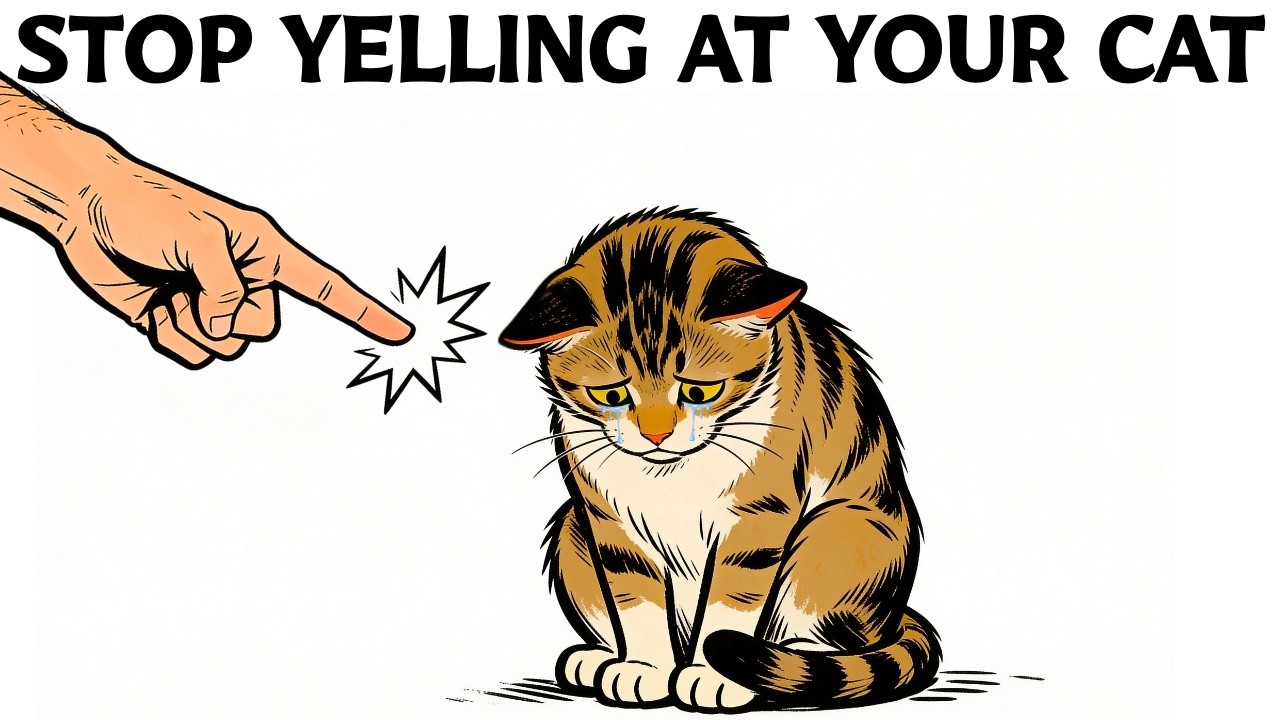 But here is what most owners never realize. Your cat is not hearing a correction. They are hearing a threat.
And if you keep doing it, which most owners do without thinking twice, you might be quietly breaking something in your cat that does not come back easily.
Let us start with what your voice actually sounds like to them.
One: Your voice sounds like a predator to them.
Have you ever wondered why your cat bolts out of the room the second you raise your voice, even when you are not yelling at them? Here is something most people do not think about. Cats can hear frequencies up to 64,000 hertz.
That is nearly three times the upper range of human hearing. Their ears evolved to pick up the faintest ultrasonic squeak of a rodent moving through grass. So when you suddenly raise your voice in a quiet room, you are not just being loud to them.
You are being overwhelmingly loud. What feels like a firm no to you can hit their ears like a shockwave they were not built to handle in close range.
And here is where it gets worse. Cats do not understand punishment. Veterinary behaviorists have been clear about this for years.
When you yell, your cat does not connect your anger to the thing they just did. They just know that you, the person they live with, are suddenly a source of something scary. The behavior does not get corrected.
The trust gets damaged. Research discussed by veterinary sources like PetMD has shown that cats 𝓮𝔁𝓹𝓸𝓼𝓮𝓭 to harsh vocal tones and anger in the household develop heightened anxiety and confusion. They do not learn what they did wrong.
They learn that their environment is not safe. And that feeling does not stay in one moment. It lingers.
Now what makes this even more important is something we are going to get to toward the end of this article. Because yelling does not just scare your cat in the moment. It changes something in how they remember you.
And most owners have no idea that is even happening.
Two: The invisible wall it builds between you two.
Have you ever noticed your cat sitting across the room watching you, but never actually coming closer? Most owners chalk this up to personality. Oh, they are just independent.
But here is what a lot of people miss. If your cat used to greet you at the door, used to curl up next to you on the couch, used to slow blink at you from across the room, and now they do not, something changed. And it probably was not their personality.
 Cats build trust through repetition. Every calm interaction, every gentle voice, every predictable moment reinforces the same message: you are safe. But yelling does the opposite.
It introduces unpredictability. And for a cat, unpredictability is the single fastest way to destroy a bond. Think about it from their perspective.
They cannot ask you what is wrong. They cannot understand that you had a rough day at work, or that you did not mean it. All they experience is this: one moment everything was fine, and the next, the loudest thing in the room was pointed directly at them.
When that happens enough times, they make a quiet decision. They stop approaching. They stop initiating.
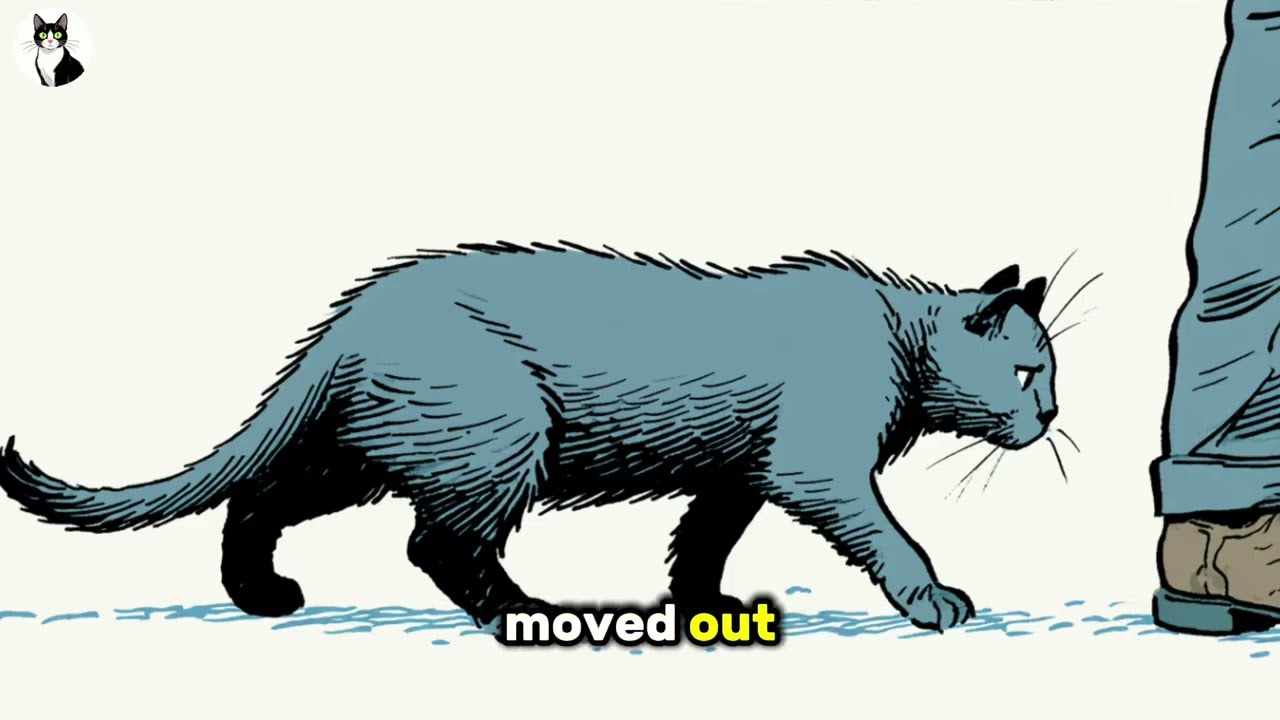
They still live in your house, but emotionally, they have moved out. Veterinary behaviorists describe this as learned avoidance. Your cat is not being cold or stubborn.
They are protecting themselves. And the heartbreaking part is that most owners do not even notice it is happening, because the change is so gradual. One less head bump here, one fewer slow blink there, until one day you realize your cat barely interacts with you anymore, and you cannot pinpoint when it started.
Three: The body keeps the score. Yes, even for cats.
Did you know your cat can look completely fine on the outside and still be falling apart on the inside? Most people think stress in cats looks dramatic. Hissing, hiding, running away.
And sure, sometimes it does. But chronic stress, the kind that builds up from repeated yelling over weeks and months, often shows up in ways you would never connect back to your voice. It starts small.
Maybe they stop eating as much. Maybe they start overgrooming one spot on their belly until the fur thins out. Maybe they start missing the litter box even though nothing else in the house has changed.
These are not random quirks. These are stress responses, and veterinary behaviorists have documented them again and again in cats living in unpredictable or tense environments.
Here is the science behind it. When a cat experiences repeated stress, their body releases cortisol, the same stress hormone humans produce. In small doses, cortisol is normal.
It helps them react to real danger. But when the stress does not stop, when the yelling keeps happening, and the environment never feels settled, cortisol stays elevated. And that is when things start breaking down.
Chronic cortisol elevation in cats has been linked to weakened immune function, digestive issues, and even feline idiopathic cystitis, a painful urinary condition that veterinarians increasingly connect to emotional stress rather than infection.
Your cat is not acting out. Their body is responding to an environment that never lets them fully relax. And the tricky part is that most owners treat the symptoms.
 They switch the food. They change the litter. They take them to the vet and run tests.
But if the root cause is a home that feels emotionally unsafe, no amount of diet changes will fix what is really going on.
Four: What to do instead. The reset that actually works.
What if the most effective way to correct your cat had nothing to do with your voice at all? Most owners yell because they do not know what else to do. The cat knocks something over, scratches the furniture, bites a cord, and in that moment, raising your voice feels like the only tool you have.
But here is the thing. Yelling was never a tool. It was always just a reaction.
And once you replace it with something that actually works, you will wonder why you ever thought volume was the answer.
The first shift is understanding that cats do not respond to punishment. They respond to environment. If your cat keeps jumping on the counter, the solution is not a louder no.
It is making the counter less appealing and giving them a better option. A tall cat tree near the kitchen window. A shelf they are allowed to climb.
When the alternative is more interesting than the thing you do not want them doing, the problem solves itself without a single word.
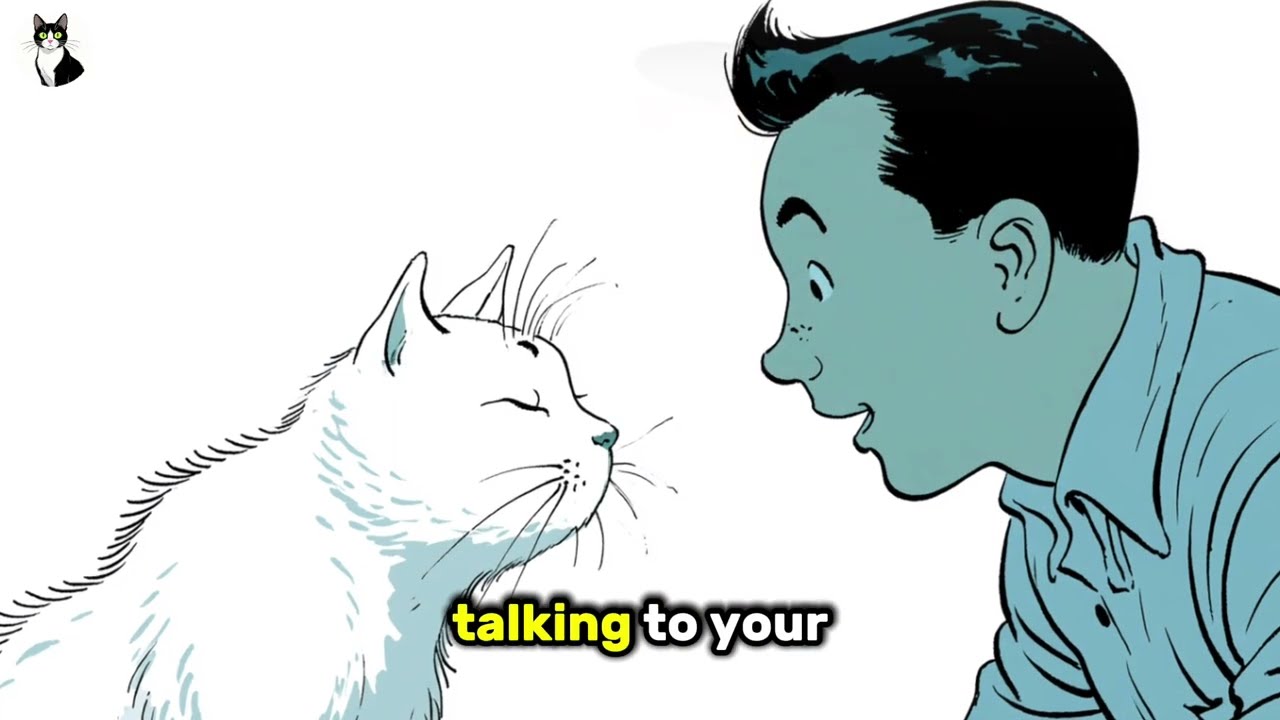
The second shift is your voice. You do not have to go silent. In fact, talking to your cat is one of the best things you can do for your bond.
But it is not about what you say. It is about how you sound. Cats are incredibly responsive to vocal tone.
A low, slow, steady voice signals calm and safety. A sudden, sharp tone signals danger. You can say, “Don’t do that,” in a way that redirects without triggering fear.
It is the difference between guiding them and scaring them.
The third shift is the one most people skip entirely. Rewarding the behavior you actually want. When your cat uses the scratching post instead of the couch, that is your moment.
A treat, a slow blink, a calm “good” in that low, steady voice. Cats repeat behaviors that lead to positive outcomes far more reliably than they avoid behaviors that lead to punishment. This is not a theory.
 This is how every reputable veterinary behaviorist approaches feline behavior modification.
And if you are sitting there thinking, “But what about the damage I have already done?” Do not worry. That is exactly what we are getting to next.
Five: The thing they never forget.
Do you know what your cat remembers most about you? It is not the treats. It is not the toys.
It is how you made them feel when things got tense. This is the part I mentioned at the beginning, and it is the one that changes everything once you understand it. Cats do not process memory the way we do.
They do not replay conversations or hold grudges over specific events. But what they do hold on to deeply is emotional association. And that is actually worse.
Your cat does not remember that you yelled at them on a Tuesday night because they knocked over a glass. What they remember is the feeling. The spike in their chest.
The sound that filled the room. And most importantly, who it came from. Over time, those emotional memories stack.
And they do not stack in a way that your cat can sort through and rationalize. They stack in a way that quietly reshapes how your cat feels every time you walk into the room.
Researchers in animal cognition have found that cats form long-term associations between people and emotional experiences. A cat who has been repeatedly startled or frightened by someone does not just avoid the behavior that caused it. They avoid the person.
Not out of spite. Out of self-preservation. Their brain has categorized you.
Not as a threat in one moment, but as someone who is emotionally unpredictable. And for a cat, unpredictable and unsafe mean the same thing.
But here is the part that makes all of this worth hearing. That system works both ways. The same emotional memory that records fear also records safety.
Every time you speak softly. Every time you sit near them without demanding their attention. Every time you let them come to you instead of reaching for them.
You are writing over the old record. Not erasing it, but building something stronger on top of it. Cats do not forgive the way we understand forgiveness.
But they do update. They do recalibrate. And if you give them enough consistent evidence that you have changed, they will slowly, on their own terms, start to come back.